If you’ve ever struggled to remove invading grass from your flower beds, you’re not alone. In addition to aggressive plant growth, northern property owners face some of the most challenging weather conditions in the nation.
Our landscapes face particular difficulties in northern Wisconsin, Minnesota, and western UP Michigan. The severe growing seasons, heavy snowfall, and extreme freeze-thaw cycles cause landscaping issues that our southern neighbors do not comprehend. However, thousands of homeowners in the tri-state area have found a solution: decorative concrete curbing.
In this article, let’s examine seven common landscape issues that homeowners in our northern climate can resolve with decorative concrete curbing and why it might be the last edging solution you ever need to install.
1. The Never-Ending Battle Against Invading Grass
It’s the same routine every spring. When the snow melts, you’ll see that the flower beds have been overrun by weeds and grass that somehow managed to get past whatever barrier you put in place the previous year. Our area’s cool, wet springs provide an ideal environment for aggressive root growth, making your efforts futile.
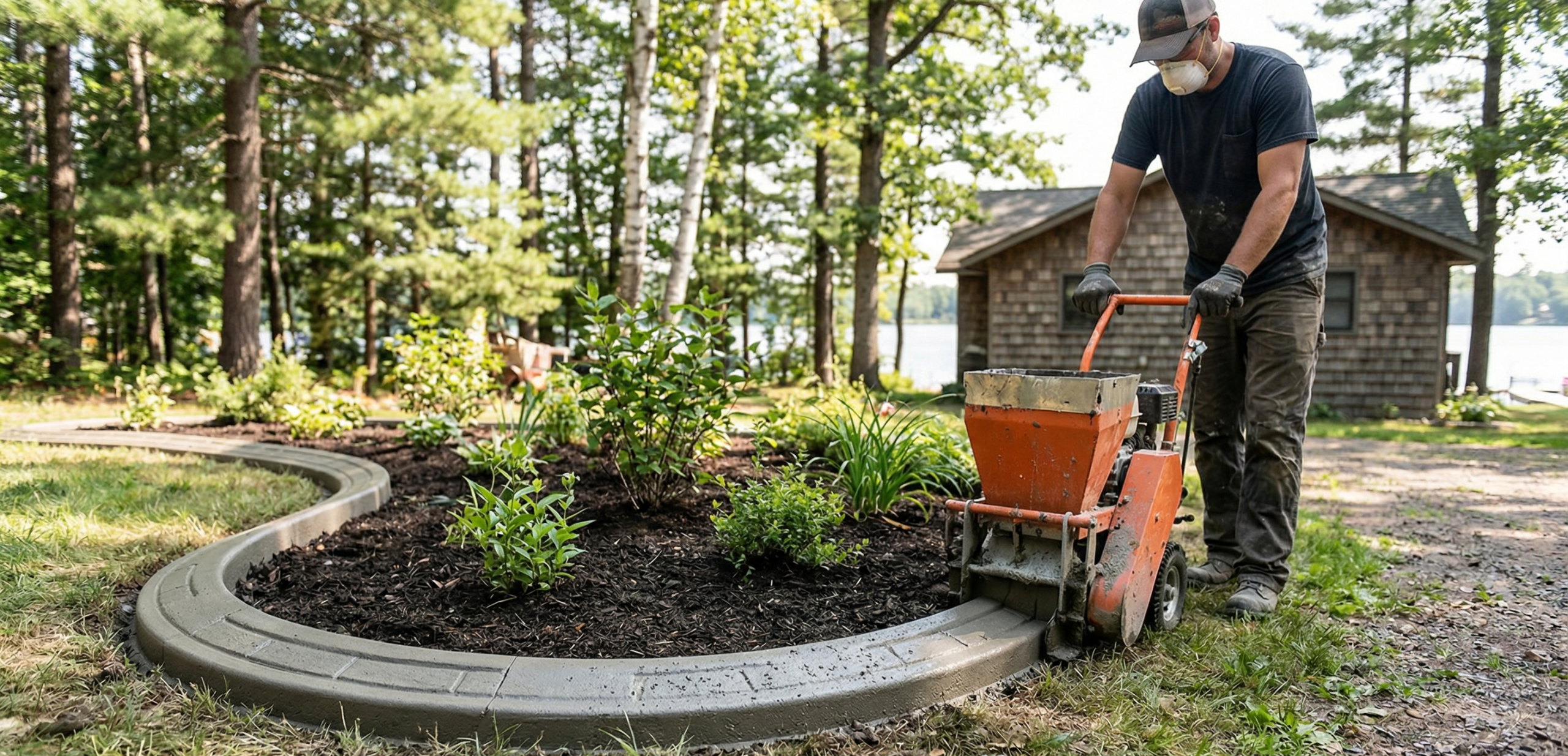
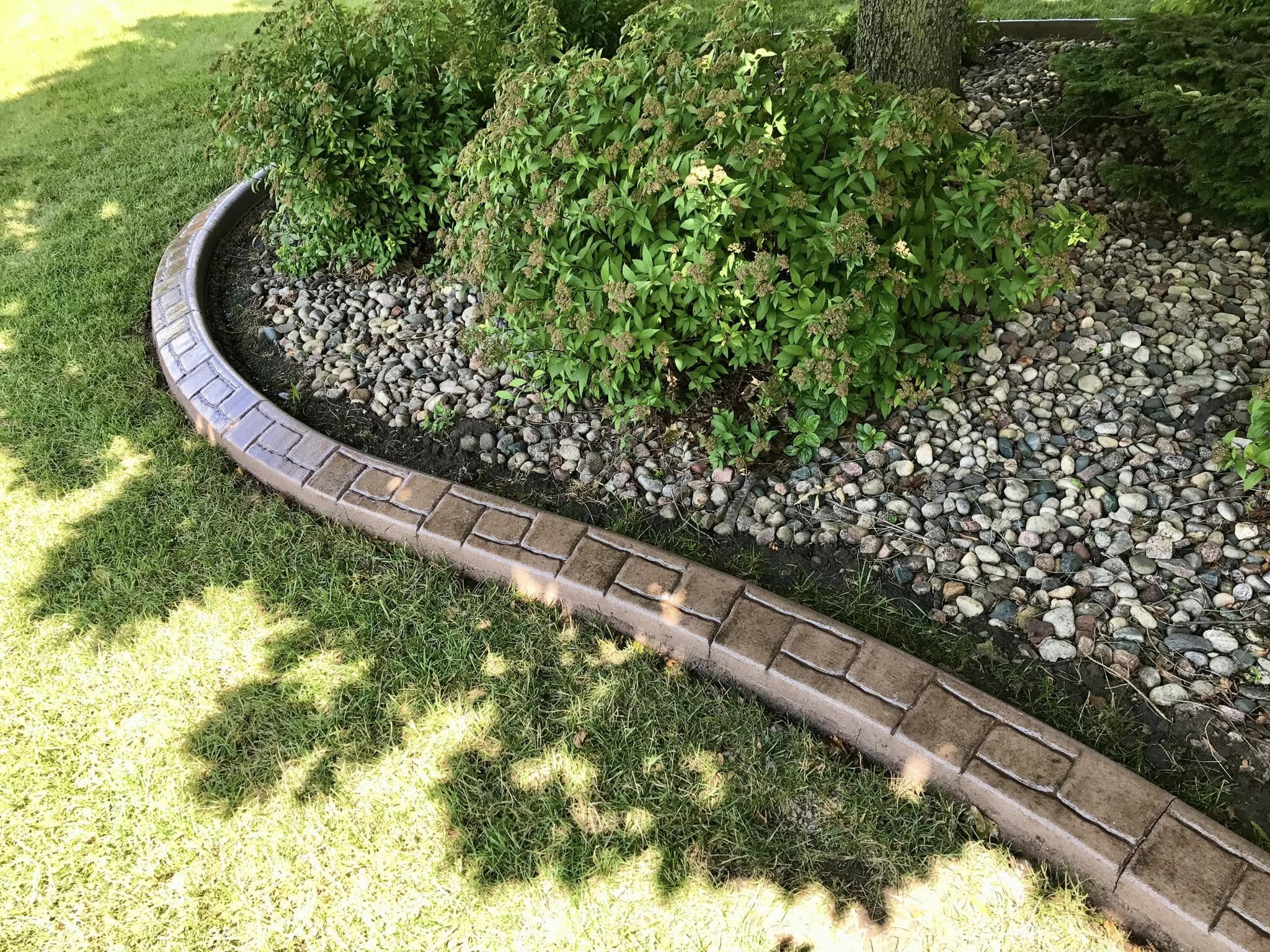
Decorative concrete curbing creates a solid barrier that prevents root systems from penetrating. Concrete curbing holds up year after year, unlike metal edging that bends and pulls away from the ground or plastic edging that shifts or cracks.
I recently heard from a homeowner in Hayward who said, “I haven’t had to edge my perennial beds once since I put decorative concrete curbing around them three years ago. Never! It used to be a monthly task from May to September.
2. The Costly Cycle of Mulch and Material Washout
You can appreciate the frustration—and cost—of having to replace landscape materials on a regular basis if you’ve ever seen your freshly laid mulch wash away after a spring rainstorm or snowmelt. This is a problem that can occur more than once a year in our northern climate.
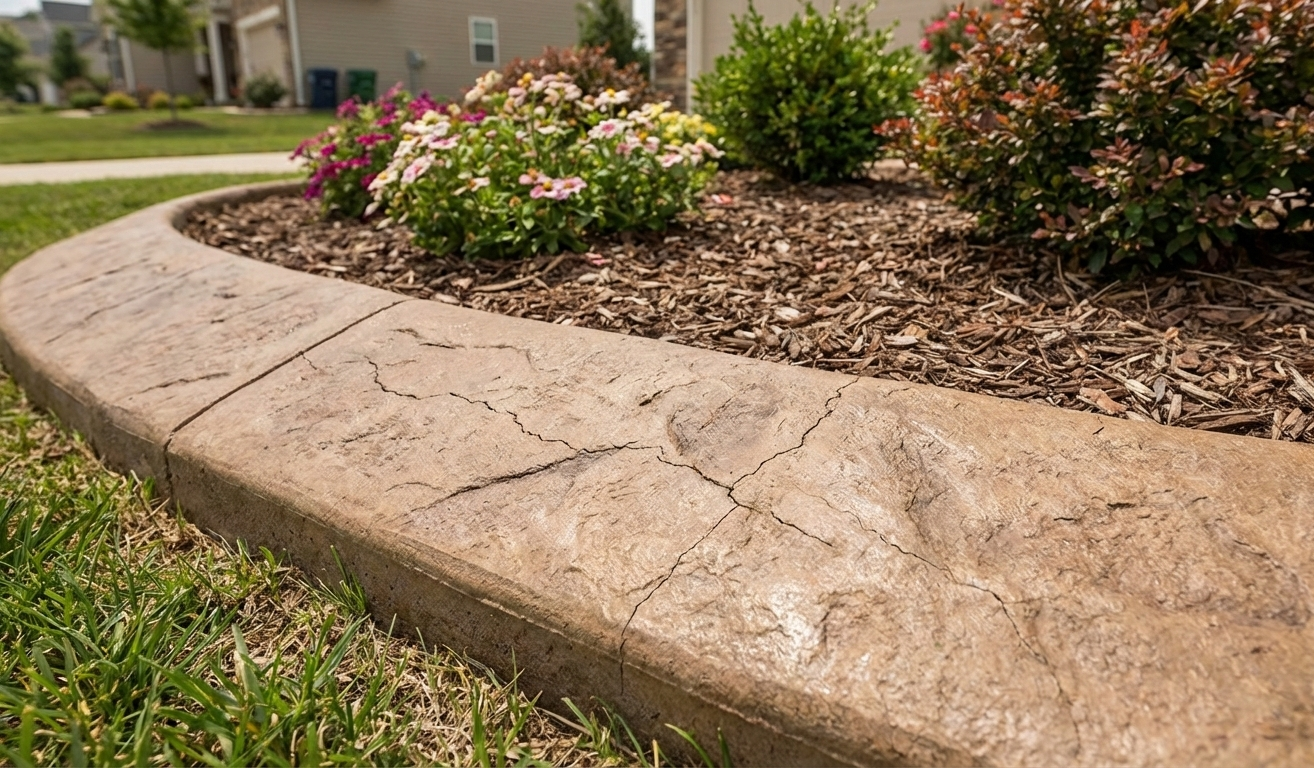
Your mulch, decorative rock, and soil will remain precisely where you want them to be thanks to the strong barrier that decorative concrete curbing’s raised profile creates. Properly installed concrete curbing stands protect against even the most intense rainfall, standing four to six inches high.
Think about this: a typical yard can cost $200 to $300 per year to replace the mulch just once a year. That’s $2,000 to $3,000 over ten years, which is a lot more than the one-time cost of decorative concrete curbing, which lasts for decades.
3. The Destructive Force of Frost Heave
Frost heave is perhaps the most distinctively “northern” landscaping problem. Ground moisture literally pushes landscape materials upward and then drops them back down, frequently in different positions, as it freezes and expands in the winter and thaws in the spring.
Brick or stone borders tumble, metal edging bends, and plastic edging cracks. Season after season, only well-installed decorative concrete curbing, with its substantial below-ground footing, can withstand these strong forces.
Correct installation is crucial. While other edging options fail within a few seasons, concrete curbing installed with the proper depth, expansion joints, and properly compacted base materials will withstand our harsh northern freeze-thaw cycles.
4. Lawn Mower Damage: The Hidden Expense
Each time you pass the lawnmower close to traditional landscape edging, you risk damaging both your edging and your equipment. Metal edging dents pricey mower blades, stone edges disperse, and plastic edging is chewed up.
Thanks to the smooth, mower-friendly edge that decorative concrete curbing offers, you can cut directly up against your landscape features without causing any damage. Mower wheels can even partially roll over the edge with the rounded profile options, removing the need for extra trimming.
This feature is even more beneficial for larger properties that use riding mowers, as it saves hours of follow-up trimming work each month during our brief but demanding growing season.
5. The “Unfinished” Look of Poorly Defined Landscapes
A landscape with deliberate, clean lines has a certain elegance. Even the most exquisite plantings suffer from a cluttered, incomplete look caused by ill-defined borders between garden beds and grass.
Curbs made of decorative concrete give your property those clean, polished lines that immediately improve its appearance. The difference is especially apparent in our area, where the contrast between the luxuriant summer growth and the bleak winter landscape makes clean edging even more crucial.
In our competitive seasonal market, local real estate agents often cite well-defined landscaping as a feature that speeds up the sale of properties. According to one agent, buyers are willing to pay more for properties with decorative concrete curbing because of their finished, low-maintenance appearance.
6. Water Where You Don’t Want It: Drainage Dilemmas
Proper drainage in northern climates is essential for more reasons than aesthetics; it shields the foundation of your house from the damaging effects of freezing water. Water can pool where it shouldn’t because of poor drainage caused by poorly marked landscape boundaries.
Water can be diverted away from foundations and kept from collecting in garden beds by installing decorative concrete curbing with purposeful drainage channels and suitable slopes. This step is especially crucial in areas of our tri-state region with clay-heavy soils.
“Water would pool against my foundation during spring thaw prior to installing decorative concrete curbing with built-in drainage channels,” explains an Iron River homeowner. “It’s now focused on my rain garden, resolving two issues simultaneously.”
7. The True Cost: Your Precious Time
Time is more valuable than money when it comes to decorative concrete curbing. The summers in the north are excruciatingly brief but magnificently beautiful. You’re not enjoying your outdoor space for every hour you spend repairing frost-damaged borders, re-edging gardens, or replacing washed-out mulch.
Consider this: even if you only dedicate two hours a month to edge maintenance during our five-month outdoor season, that equates to ten hours a year for a task that concrete curbing virtually completely removes.
The Armor Curbing Difference
Armor Curbing Co. has created unique methods especially for our harsh northern climate after assisting thousands of property owners in Northern Wisconsin, Northern Minnesota, and the Western UP of Michigan in resolving these typical landscaping issues.
Although other businesses provide decorative concrete curbing, few are aware of our area’s particular difficulties. The installation techniques used by Armor Curbing include region-specific design options that blend in with northern architectural styles, specially formulated concrete mixes that withstand our harsh freeze-thaw cycles, and deeper-than-standard footings to prevent frost heave.
The Bottom Line: Is Decorative Concrete Curbing Right for Your Property?
While decorative concrete curbing solves many common landscaping problems, assessing your specific property needs is essential. The initial investment is higher than temporary solutions, but the long-term value, in reduced maintenance, eliminated replacement costs, and enhanced property appeal, makes it worth considering.
Ready to explore whether decorative concrete curbing is the right solution for your landscape challenges? Armor Curbing Co. offers free, no-obligation property assessments throughout the tri-state area. Our experts will evaluate your specific situation, discuss options that might work for your property, and provide transparent pricing information.
Contact Armor Curbing today to schedule your consultation and take the first step toward solving these common landscaping headaches once and for all. Your future self will appreciate that you won’t have to spend endless hours battling invading grass next spring.