Front yard edging ideas that work in northern Wisconsin need to withstand freeze-thaw cycles, heavy snowfall, and aggressive spring melt without shifting or cracking. The best options include concrete landscape curbing, natural stone borders, and steel edging, with concrete curbing typically offering the longest lifespan in cold climates. Armor Curbing Co. serves homeowners across Hayward, Rice Lake, and the broader Northwoods with edging solutions built for our environment.
You pull into your driveway after a long winter, and the first thing you notice is the front bed. The plastic edging has popped up in three spots. Mulch has washed halfway across the lawn. The line between garden and grass has disappeared entirely. That spring moment is exactly when most northern Wisconsin homeowners start searching for something more permanent.
Concrete Curbing for Garden Beds
Choosing the right edging for your garden beds is the most impactful way to define your landscape and protect your investment from the elements.
Continuous Durable Borders
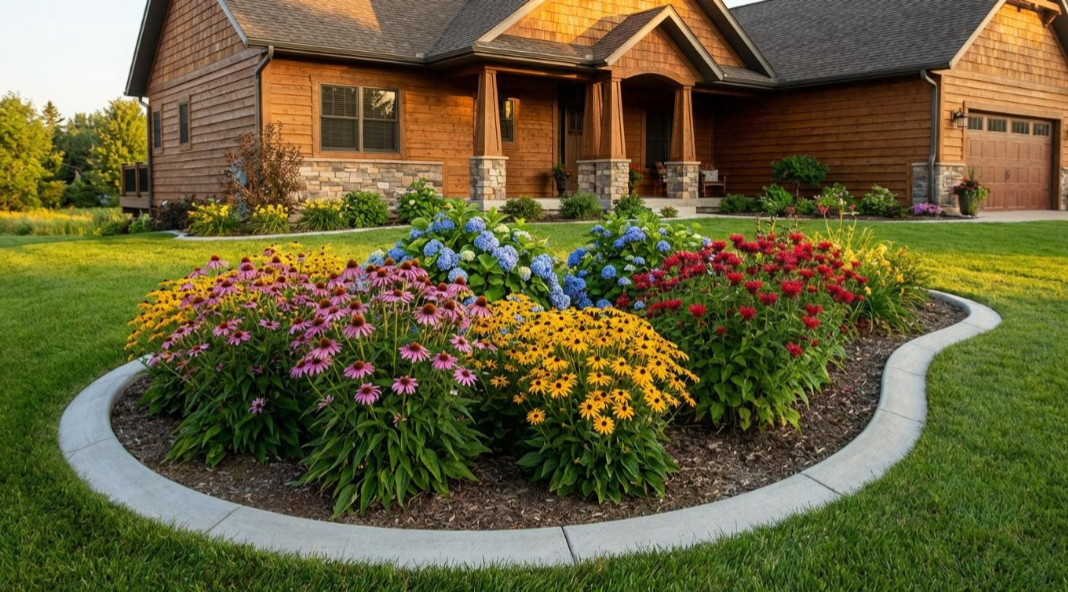
Extruded concrete curbing is typically the most durable front-yard edging option for properties in northern Wisconsin. The curbing is poured as one continuous, seamless border directly along your garden beds using specialized machinery. No joints means no weak points where frost heave can push sections apart.
Custom Patterns and Textures
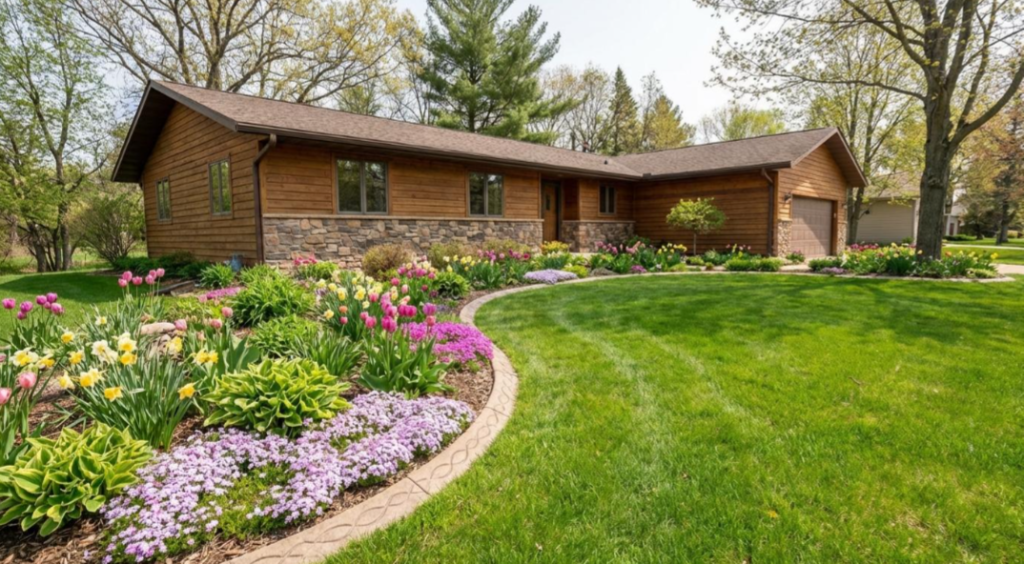
Concrete curbing comes in a range of decorative styles. Stamped patterns like cobblestone, flagstone, and natural stone give the border a finished look that complements traditional and modern homes. Homeowners in Hayward often choose rustic patterns that match the Northwoods aesthetic, while properties in Rice Lake lean toward cleaner soldier course or smooth finishes. Browse the full selection of curbing design options to find a match for your home.
Integrated Color and UV Protection
Color is integrated into the concrete mix, so it won’t chip or peel like painted borders. A UV-resistant sealer applied after installation protects the color from fading through Wisconsin’s intense summer sun.
Tree Rings and Accent Borders
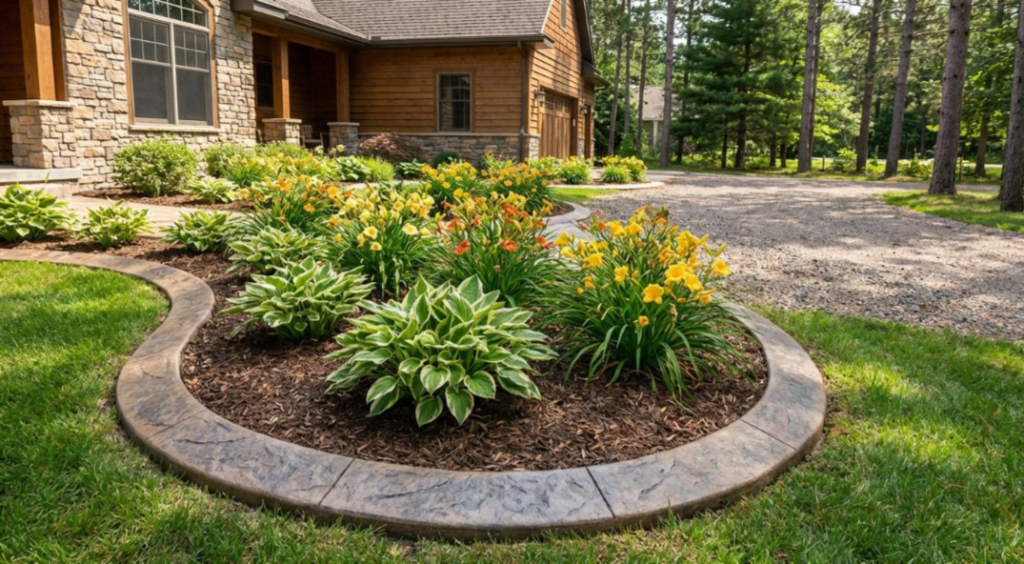
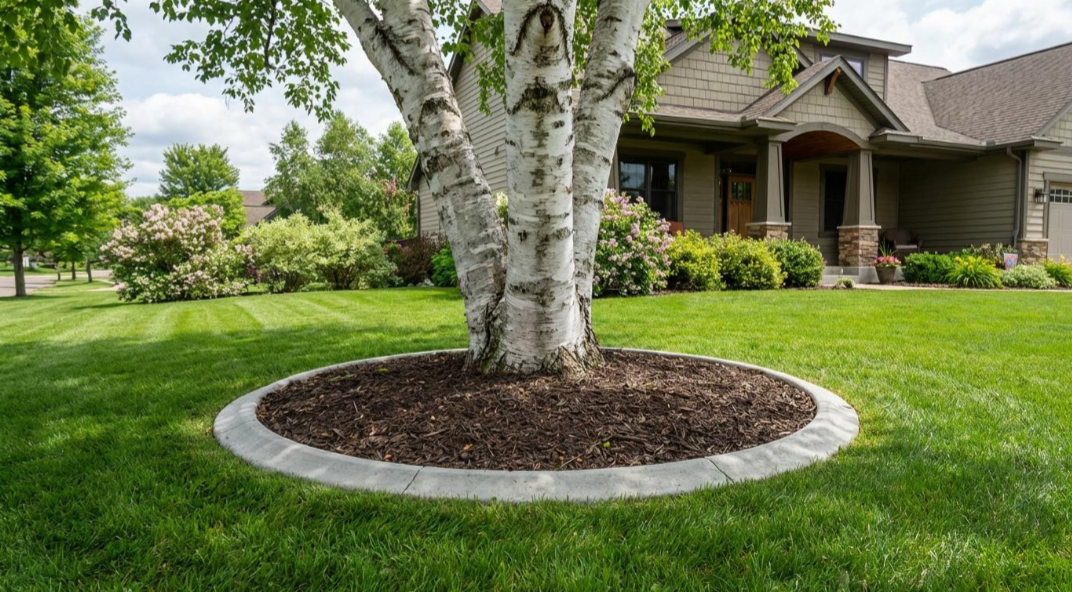
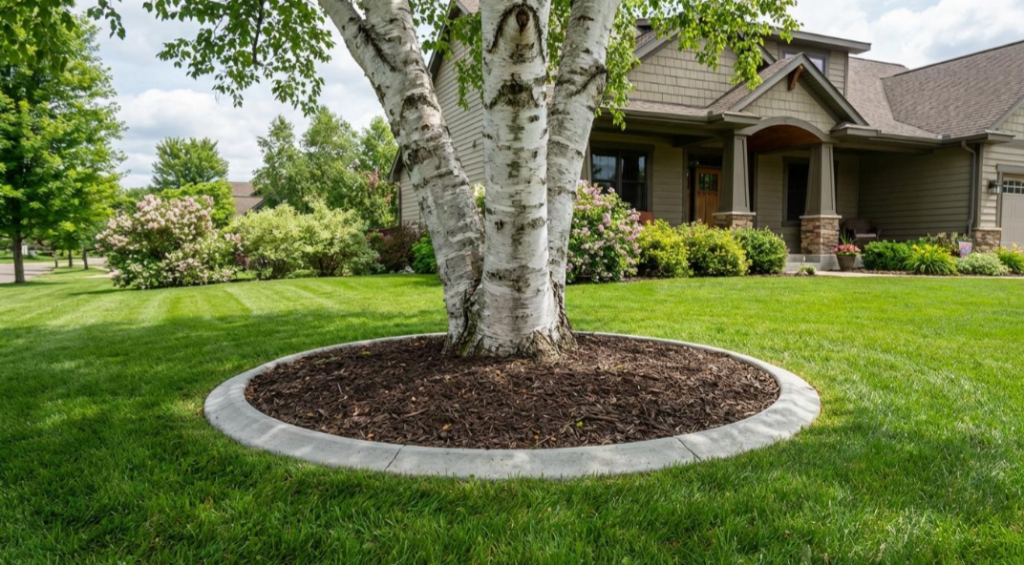
Concrete curbing can be used to create protective rings around trees while drawing focus to paved areas like walkways and porches.
Tree Rings for Trunk Protection
A concrete curbing ring around a mature oak or birch tree creates a clean, defined mulch bed that keeps your mower at a safe distance from the trunk. That separation protects bark from trimmer damage, a common cause of tree stress in residential yards.
Accent Borders for Walkways and Porches
A low-profile concrete edge keeps mulch contained and prevents soil from creeping onto paved surfaces. In communities like Hayward and Rice Lake, where larger front yards are common, accent borders visually break up the space and draw the eye toward key landscape features.
Matching Curbing Profile to the Application
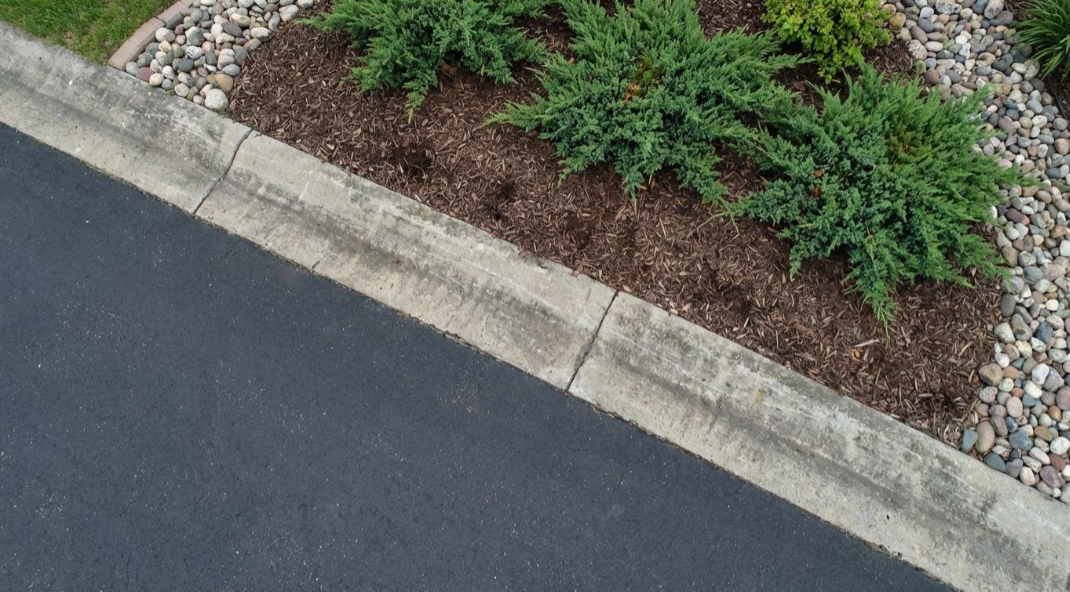
Matching the curbing profile to the application matters. Garden beds typically use a taller mower-safe edge, while walkway accents use a flatter slanted profile that blends into the hardscape. Armor Curbing Co. reviews these details during the design consultation to ensure every border serves its purpose.
Edging Materials That Handle Northern Winters
Not all edging materials are capable of surviving a northern Wisconsin winter. Plastic edging costs $1 to $3 per linear foot, but it heaves out of the frozen ground and cracks when hit by a snow blower. Most plastic in the Northwoods needs to be replaced every 3 to 5 years. Steel edging holds its shape better but rusts where salt runoff and standing water collect. Paver borders separate as soil expands and contracts through freeze-thaw cycles, needing periodic resetting.
Concrete curbing costs $10 to $20 per linear foot but is poured in place with frost-depth trenching and reinforcement cable. Control joints every two feet manage thermal expansion, and the jointless design eliminates gaps that let weeds and water through. Over a 10-year period, concrete curbing typically costs less than replacing plastic or resetting pavers multiple times.
Frequently Asked Questions
What front yard edging works best in freeze-thaw climates?
Extruded concrete curbing performs best in freeze-thaw climates because it’s poured as one seamless piece with frost-depth trenching and reinforcement cable. Armor Curbing Co. installs control joints every two feet to manage thermal expansion, which is the primary cause of edging failure in northern Wisconsin winters.
How much does front yard edging cost in Wisconsin?
Pricing depends on material and linear footage. Plastic edging costs $1 to $3 per foot, steel runs $3 to $8, and concrete curbing ranges from $10 to $20 per linear foot installed. Concrete carries the highest upfront cost but the lowest long-term cost because it rarely needs replacement in this climate.
Can I add edging to an existing landscape without damaging plants?
Concrete curbing can be installed around existing gardens, trees, and shrubs with minimal disruption. The extrusion machine follows the natural contours of your landscape, and the installation team works carefully around root zones and established plantings to protect them.
Curb Appeal Starts at the Edge

The difference between a front yard that looks maintained and one that looks finished often comes down to the edging. A clean, permanent border frames your garden beds, protects your lawn from mulch migration, and shows the property is well cared for year-round.
Get a free estimate from Armor Curbing Co. that’s tailored to your property and climate.