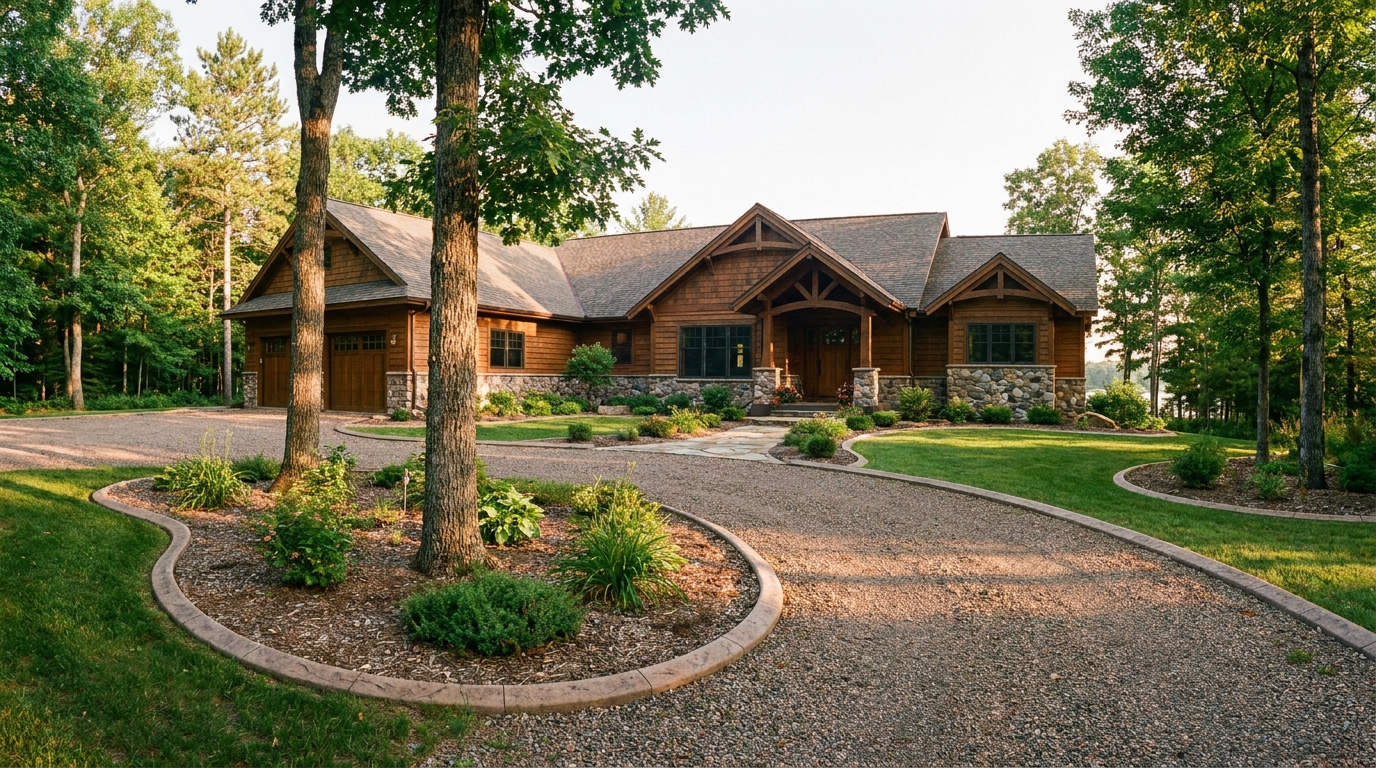
When the snow finally melts in spring, revealing cracked, heaved, or completely dislodged landscape edging, it’s a moment every northern property owner dreads. That beautiful landscape border you invested in last year now looks like it went ten rounds with Old Man Winter—and lost badly.
If you’re considering decorative concrete curbing as a long-term solution to this annual headache, you’re making a smart move. But here’s the hard truth: not all concrete curbing is created equal, and in our harsh Northern Wisconsin, Minnesota, and UP Michigan climate, choosing the wrong contractor can leave you with an expensive mess come springtime.
Before you sign on the dotted line with any decorative concrete curbing company, arm yourself with these critical questions. Your future self, not dealing with frost-heaved, cracked edging next spring, will thank you.
Question #1: What Installation Methods Do You Use to Prevent Frost Heave?
This might be the most critical question for northern property owners. In our region, where frost can penetrate 4-5 feet deep, standard installation methods don’t cut it.
What to listen for: A quality contractor will immediately discuss deeper-than-standard footings (at least 8-10 inches in our region), properly compacted base materials, and reinforcement techniques. They should mention how they account for soil movement during freeze-thaw cycles and discuss expansion joints placed at strategic intervals.
Red flag: If they give vague answers or suggest that standard 4-inch footings are sufficient in our climate, keep shopping. They don’t understand northern conditions.
One property owner in Ashland learned this lesson the hard way: “We hired the lowest bidder, who assured us their installation would hold up. By spring, sections were cracked and lifted nearly two inches. We ended up paying twice—once for the failed installation and again for a proper one.”
Question #2: Can You Show Me Local Examples of Your Work That Are At Least 3-5 Years Old?
Anyone can install decorative concrete curbing that looks great when it’s fresh. The real test is how it holds up after enduring multiple northern winters.
What to look for: Ask to see installations that have weathered at least 3-5 harsh winters. Pay attention to cracking, heaving, color retention, and edge definition. Even better, ask to speak with these customers about their experience.
“When we looked at their five-year-old installations in Ironwood, we could see the difference in quality,” shared one homeowner. “The curbing still looked crisp and hadn’t shifted despite being through five Upper Peninsula winters.”
Question #3: What Concrete Mix Do You Use, and Why Is It Appropriate for Northern Climates?
Standard concrete mixes that work perfectly in Alabama or Arizona will fail spectacularly in our region. The science of concrete in freeze-thaw environments is specific and non-negotiable.
What to listen for: Professional contractors will discuss air entrainment (tiny air bubbles that allow for expansion during freezing), appropriate PSI strength (usually 4000+ for our region), and specific additives that improve cold-weather performance. They should be able to explain why their mix works specifically in northern climates.
A quality contractor won’t just say, “We use good concrete,” but they’ll explain the science behind their mix and why it matters to your installation’s longevity.
Question #4: How Do You Handle Drainage Considerations in Your Installation?
In freeze-thaw environments, water poses a significant threat to any hardscape. When trapped, it expands upon freezing, creating pressure that cracks concrete. Proper drainage design is non-negotiable in our region.
What to ask: How will they ensure water doesn’t pool against the curbing? Will they include drainage channels where needed? How do they account for spring snowmelt, which can be substantial in our area?
Listen for specifics about slope considerations, drainage channels, and how they assess individual property needs rather than a one-size-fits-all approach.
Question #5: What Does Your Warranty Cover and For How Long?
Warranties reveal a company’s confidence in its own work, especially for installations facing our challenging climate.
What to look for: A quality warranty should cover structural failures, heaving, and significant cracking for at least 2-3 years. Be wary of warranties with extensive exclusions specifically for “winter damage” or “freeze-thaw cycles”—that’s precisely what your installation needs to withstand in our region.
Ask pointed questions: “Is there coverage for heating sections during winter?” What about cracking from freeze-thaw cycles?” Their responses will reveal a great deal about their level of confidence in their installation techniques.
Question #6: What Experience Do You Have With Specific Northern Midwest Soil Conditions?
Our region has diverse soil challenges—from the heavy clay of parts of Northern Wisconsin to the sandy, rocky soils common in portions of the UP. Each requires different preparation techniques.
What to listen for: A knowledgeable contractor will ask about your specific location and discuss the typical soil conditions there. They should explain how they modify their base preparation based on soil type and drainage patterns.
They might say, “In that part of Iron County, we typically encounter heavy clay, so we’ll need to create a deeper crushed stone base to ensure proper drainage and prevent frost heave.”
Question #7: How Do You Price Your Work, and What Factors Affect the Final Cost?
Transparency in pricing reflects a company’s overall business ethics. Quality decorative concrete curbing in northern climates isn’t cheap, but the long-term value makes it worthwhile when properly installed.
What to look for: A quality contractor will break down their pricing structure, explaining what factors affect cost. They should discuss linear footage, design complexity, access challenges, soil conditions, and color/finish.
Be cautious of prices that seem excessively low, as they often indicate poor quality. In our harsh climate, cutting corners on materials or installation depth to lower prices leads to premature failure.
The Armor Curbing Difference
At Armor Curbing Co., we’ve specialized in decorative concrete curbing explicitly designed for Northern Wisconsin, Northern Minnesota, and Western UP Michigan conditions for years. Our installation methods were developed through extensive experience with the unique challenges our region presents.
We’ve seen the failures that occur when standard installation techniques meet northern winters, which is why we developed our frost-resistant installation system. Our concrete mix includes specific air entrainment levels and additives designed for maximum durability in temperatures ranging from -30°F to 90°F.
Despite the opportunity to offer cheaper installations, we have opted to provide decorative concrete curbing that withstands our challenging environment. Our extensive portfolio of installations that have withstood multiple harsh winters speaks to the effectiveness of our approach.
Make Your Landscape Investment Last
Decorative concrete curbing can transform your property with elegant, permanent landscape borders that enhance curb appeal while dramatically reducing maintenance. However, in our northern climate, selecting the right contractor can make a significant difference between a long-lasting solution and a springtime disappointment.
Armed with these questions, you’ll be able to separate contractors who truly understand northern installation requirements from those who don’t, potentially saving thousands in replacement costs.
Ready to explore installing decorative concrete curbing specifically for northern climate performance? Contact Armor Curbing for a free property assessment. We’ll evaluate your specific landscape needs, soil conditions, and drainage requirements to provide a detailed proposal tailored to your property’s unique challenges. We are just a conversation away from creating your beautiful, lasting landscape borders.