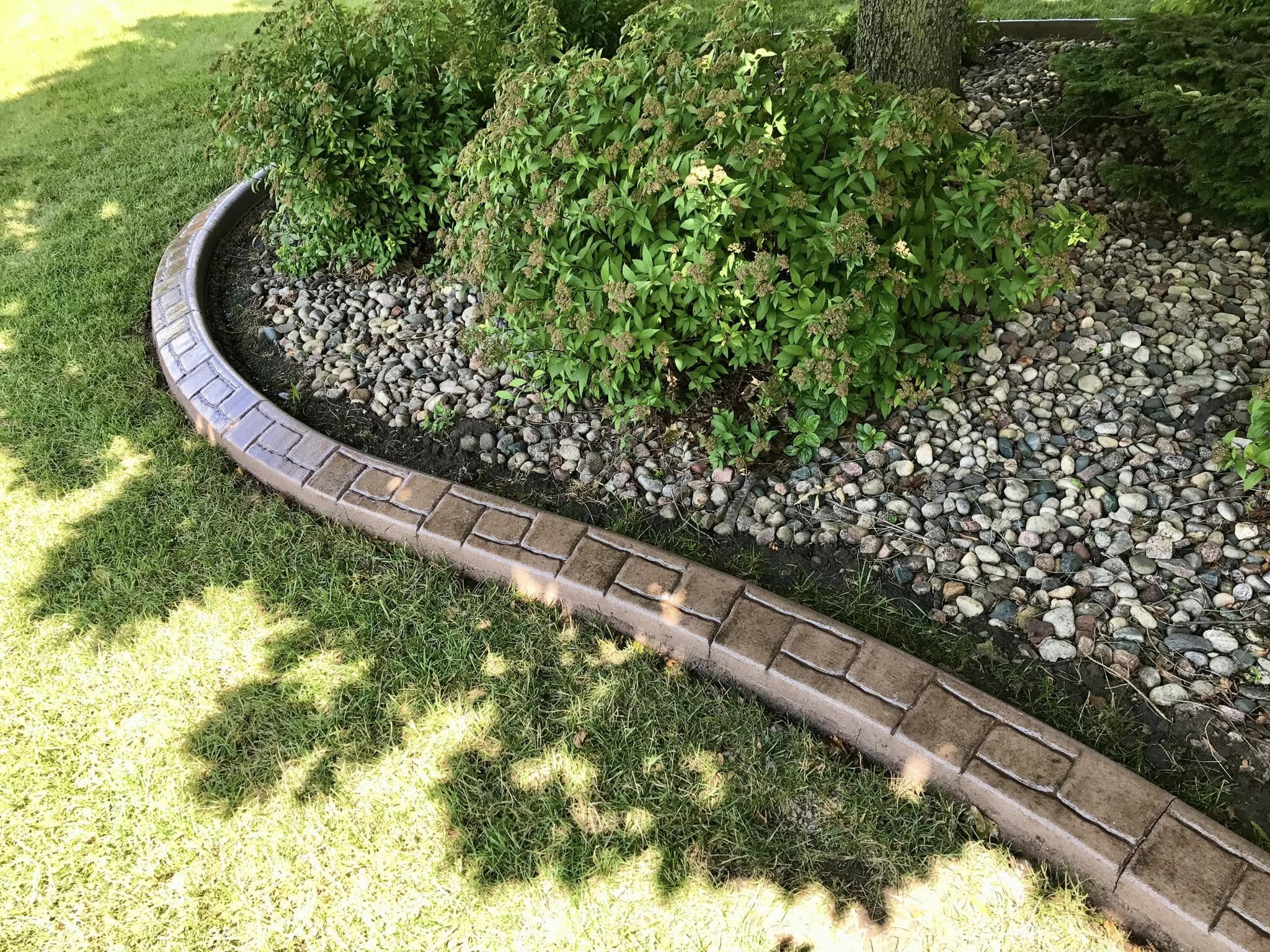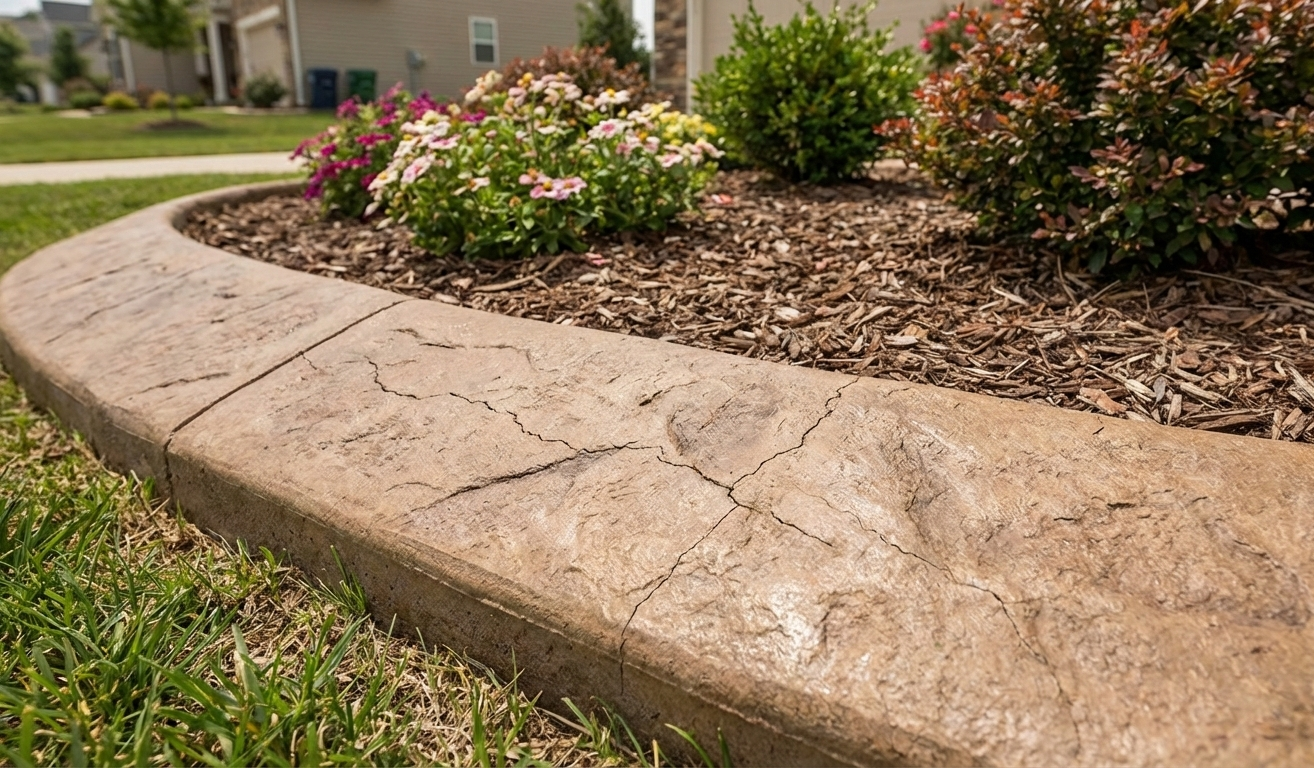
How long concrete curbing lasts depends on installation quality, climate exposure, and routine maintenance. In northern Wisconsin and Minnesota, well-installed concrete curbing typically lasts 20 years or more. Armor Curbing Co. installs curbing engineered for Northwoods freeze-thaw conditions, and this guide covers what drives its lifespan and how to protect it.
As March snow pulls back across the Northwoods, homeowners are getting their first look at their landscaping since November. If your plastic edging heaved out of the ground again this winter, it’s worth understanding why concrete curbing outlasts alternatives. The answer comes down to how it’s built and what it’s built for.
What Determines How Long Concrete Curbing Lasts?
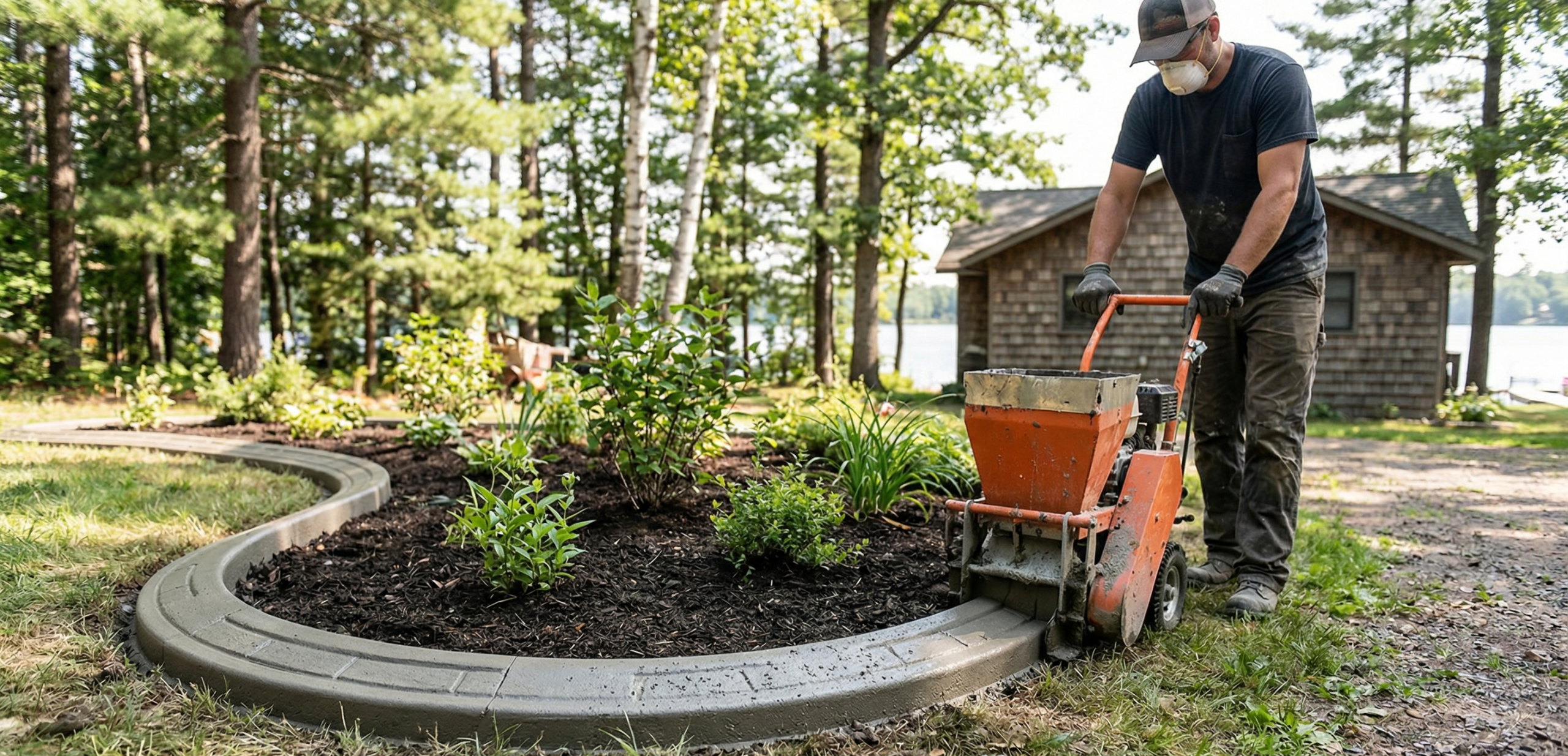
The lifespan of concrete curbing isn’t a fixed number. Four installation factors drive it:
- Material quality: High-grade cement with reinforcement cable resists cracking forces from the inside out, not just from surface stress.
- Frost-depth trenching: In northern Wisconsin and the Twin Ports region, the frost line can reach four feet or deeper. Curbing anchored below that line doesn’t shift when the soil above it freezes and moves.
- Control joint placement: Score lines, cut every two feet, give the concrete planned flex points. Without them, thermal stress builds until the concrete cracks on its own terms.
- Sealer application: A UV-resistant sealer applied during installation protects against sun exposure, water infiltration, and de-icing salt damage.
Reinforcement cable without frost-depth trenching still shifts, and good trenching without control joints still cracks. All four are necessary.
How Freeze-Thaw Cycles Affect Curbing Lifespan in Northern Wisconsin

Northern Wisconsin and the Duluth, MN area can see dozens of freeze-thaw cycles in a single winter. Each cycle stresses any material that can’t flex. Plastic edging heaves because it’s too light to resist frost pressure. Metal borders crack under snow removal equipment. Paver edging separates as soil contracts and expands.
Concrete curbing holds because the concrete curbing installation process accounts for these environmental factors. Frost-depth trenching, control joints every two feet, and reinforcement cable let the curbing coexist with the climate rather than fight it.
Near Lake Superior in Ashland or Two Harbors, lake-effect snow and shoreline wind add moisture exposure that makes sealing critical.
The Role of Installation Quality in Long-Term Performance

Installation quality is the single biggest variable—more than climate or soil type. Two properties with identical conditions can get very different results depending on who installed the curbing.
Armor Curbing Co. focuses exclusively on concrete curbing for northern Wisconsin and Duluth-area homeowners. Every installation follows the same process: site evaluation, a homeowner-approved layout before pouring begins, frost-depth excavation, on-site mixing with reinforcement cable, and UV-resistant sealer at the finish. Shortcutting the trenching depth or joint spacing is how curbing ends up shifting within a few years.
How To Maintain Concrete Curbing So It Lasts Decades

Concrete curbing needs less upkeep than plastic, metal, or paver alternatives—but it still needs some maintenance. Here are the two tasks that matter:
- Cleaning: A garden hose handles regular upkeep. A pressure washer clears heavier buildup from mulch or winter salt residue.
- Resealing: Concrete curbing in Duluth and northern Wisconsin should be resealed every two years. Unsealed concrete becomes more porous over time and can degrade from the surface inward, a harder fix than a routine reseal.
For homeowners weighing the investment, concrete curbing in Wisconsin typically costs $10 to $20 per linear foot installed.
If cracks appear between reseal cycles, address them before they grow. Our guide on concrete curbing repair covers what’s fixable and what to watch for.
Frequently Asked Questions
Does concrete curbing crack in cold climates?
Properly installed curbing manages cracking through control joints, score lines cut every two feet that give the concrete a planned flex point. Thermal stress releases along those seams rather than splitting the face unpredictably. Hairline cracks at joint lines are normal, not a defect.
How often does concrete curbing need to be resealed in Wisconsin?
Every two years is the standard. UV exposure, freeze-thaw cycles, and road salt runoff in northern Wisconsin and the Duluth region break down sealer faster than in warmer climates. Armor Curbing Co. offers resealing as a standalone service to keep existing curbing protected.
Is concrete curbing worth it compared to plastic or metal edging?
Yes, the upfront cost is higher, but the long-term value is much better for northern Wisconsin homeowners. Plastic and metal edging needs replacing every few years after winter damage. Concrete installed to frost depth typically lasts 20-plus years with basic maintenance.
Long-Term Curbing Starts With the Right Installation
Concrete curbing lasts decades in northern Wisconsin and Minnesota when it’s installed correctly. The right mix, frost-depth trenching, control joints every two feet, and a UV-resistant sealer aren’t extras; they’re what separates a 20-plus-year installation from one that shifts within a few years.
Contact Armor Curbing Co. for a free estimate and see what properly engineered concrete curbing looks like in your yard.