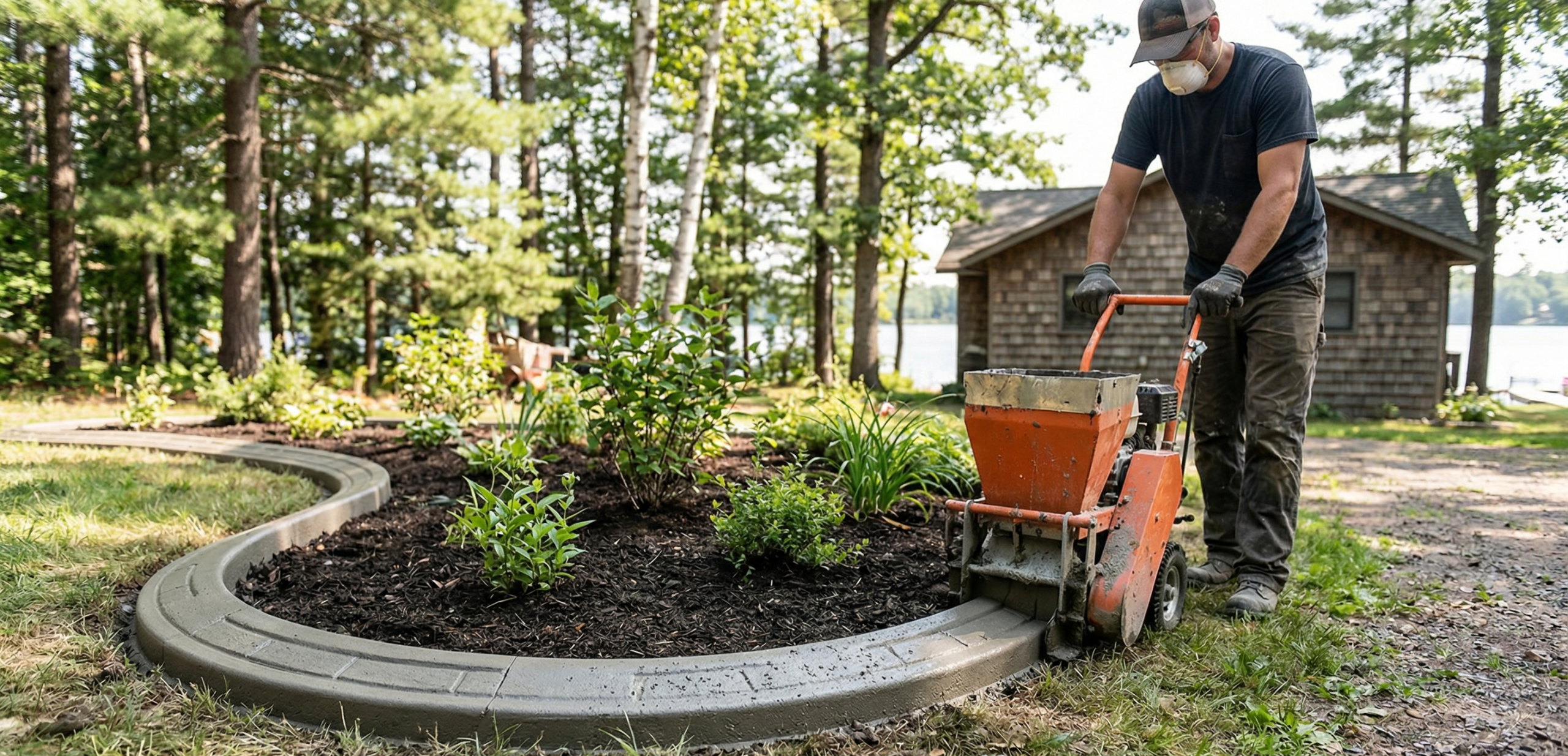
When Northern Wisconsin homeowners start exploring the types of concrete curbing, they’re often surprised by how many styles exist beyond basic borders. Concrete landscape curbing isn’t one-size-fits-all. It comes in profiles ranging from low, subtle edges that barely rise above ground level to tall decorative barriers that make dramatic statements in your landscape.
Whether you’re defining flower beds in Duluth, creating driveway borders in Eau Claire, or designing elaborate landscape features anywhere in the tri-state region, knowing the different types of concrete curbing and what each style does best helps you choose edging that looks exactly how you envision while performing reliably through our brutal winters.
Popular Types of Concrete Curbing for Northern Properties

Several concrete curbing profiles have proven to be reliable performers in Northern Wisconsin’s challenging climate, each offering distinct aesthetic and functional characteristics.
Mower’s Edge (Flat Top)
Mower’s edge curbing features a low, flat-topped profile that sits close to ground level, creating subtle definition without visual prominence. This concrete curbing style typically rises just 2 to 3 inches above ground with a flat top that allows mower wheels to roll across without damage.
Its best applications are properties where subtle borders are preferred, areas where you want to mow over the edge without lifting equipment, and landscapes with contemporary or minimalist aesthetics.
Slant or Angled Edge
Slant edge curbing features an angled face that rises from ground level at approximately 45 degrees, creating more visual presence than mower’s edge while remaining relatively low-profile. This type of concrete curbing typically stands 4 to 5 inches tall with a distinctive sloped face.
Ideal uses include flower bed borders where you want clear definition, driveway and walkway edges that guide traffic, and properties seeking a traditional curbing appearance. The angled face sheds water effectively and provides a classic look that complements most architectural styles.
Decorative Stamped Curbing
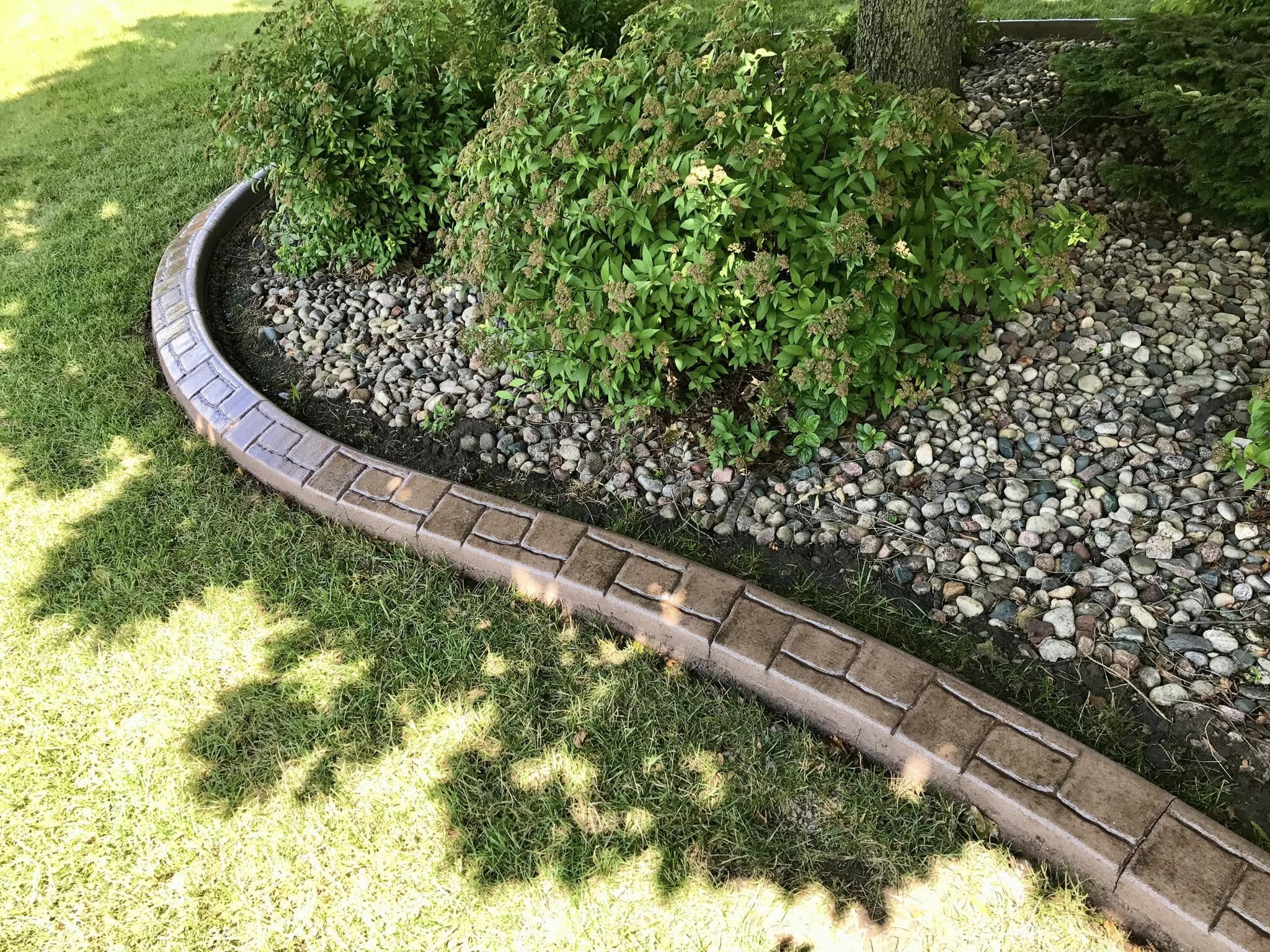
Stamped concrete curbing incorporates textured patterns pressed into the surface while the concrete is still workable. Some popular patterns are stone, brick, and cobblestone designs. This type of concrete curbing adds visual interest and texture that elevates landscapes.
Its aesthetic appeal makes stamped curbing ideal for front yards, entryways, and high-visibility areas where the landscape is expected to create a strong first impression. Properties with upscale landscaping or formal gardens benefit from the added detail that stamped patterns provide.
Colored Concrete Curbing
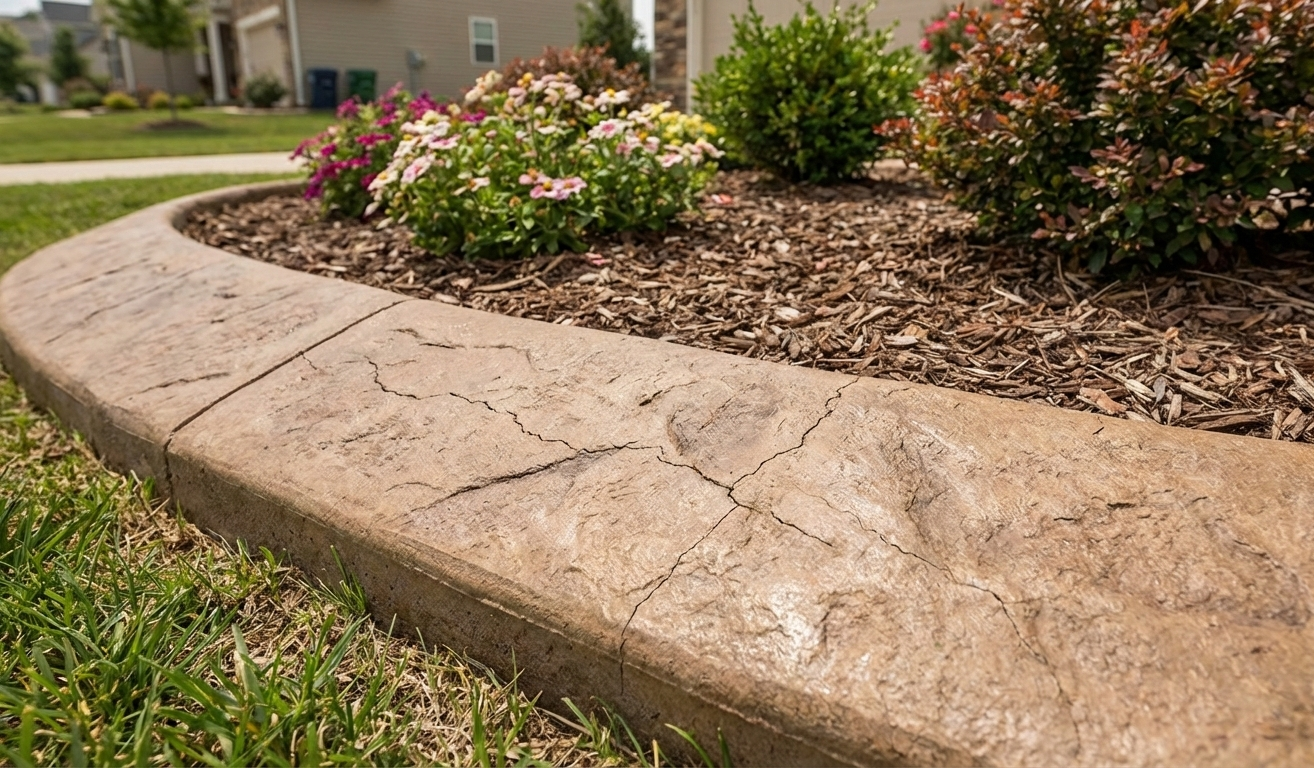
Colored curbing incorporates pigments throughout the concrete or applies color treatments to the surface, creating curbing in virtually any hue. Color choices range from earth tones that blend naturally with landscapes to bold colors that create dramatic contrast.
Matching or contrasting with existing landscape elements allows colored concrete curbing to either complement hardscaping or provide accent colors that make gardens pop. Long-term color stability ensures your chosen hue remains vibrant despite years of outdoor exposure.
Barrier or Tall Curbing
Tall curbing rises 6 to 8 inches (or more) above the ground, creating a strong visual and physical barrier. It’s often used to keep vehicles from crossing into garden areas, hold soil in sloped beds, define property lines, or contain loose materials like decorative rock. This style works especially well for properties with slopes or driveways.
Matching Curbing Types to Your Landscape Needs
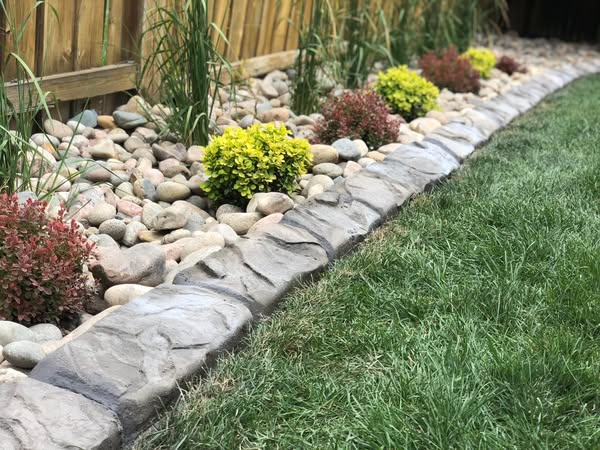
The right type of concrete curbing depends on your landscape design, needs, and aesthetic preferences.
Consider these factors when choosing from the types of concrete curbing:
- Property style – Match curbing profiles to your home’s architectural style
- Functional requirements – Consider drainage needs, mulch containment, or vehicle barriers
- Maintenance preferences – Some profiles make mowing and trimming easier
- Budget considerations – Decorative options cost more but add visual impact
- Climate – All quality curbing survives northern winters
Before deciding, observe how water moves across your yard after heavy rain and note where soil shifts or mulch washes out. Those small clues reveal which curbing profile and installation depth will perform best for your property’s unique layout and conditions. If you’re still in doubt, reach out to the Armor Cubing team for tailored recommendations.
Find Your Perfect Concrete Curbing Style With Armor Curbing

Whether you’re after subtle definition, bold borders, or decorative detail, the right concrete curbing style can transform your landscape while standing strong through northern winters. Professional installation is key. Accounting for frost depth, soil conditions, and drainage patterns specific to our region ensures your edging stays beautiful and stable for decades. Armor Curbing combines technical precision with design expertise to help you choose and install curbing that fits your property’s needs and style.
Want curb appeal that lasts season after season? Contact Armor Curbing today for expert advice and installation built for northern climates.