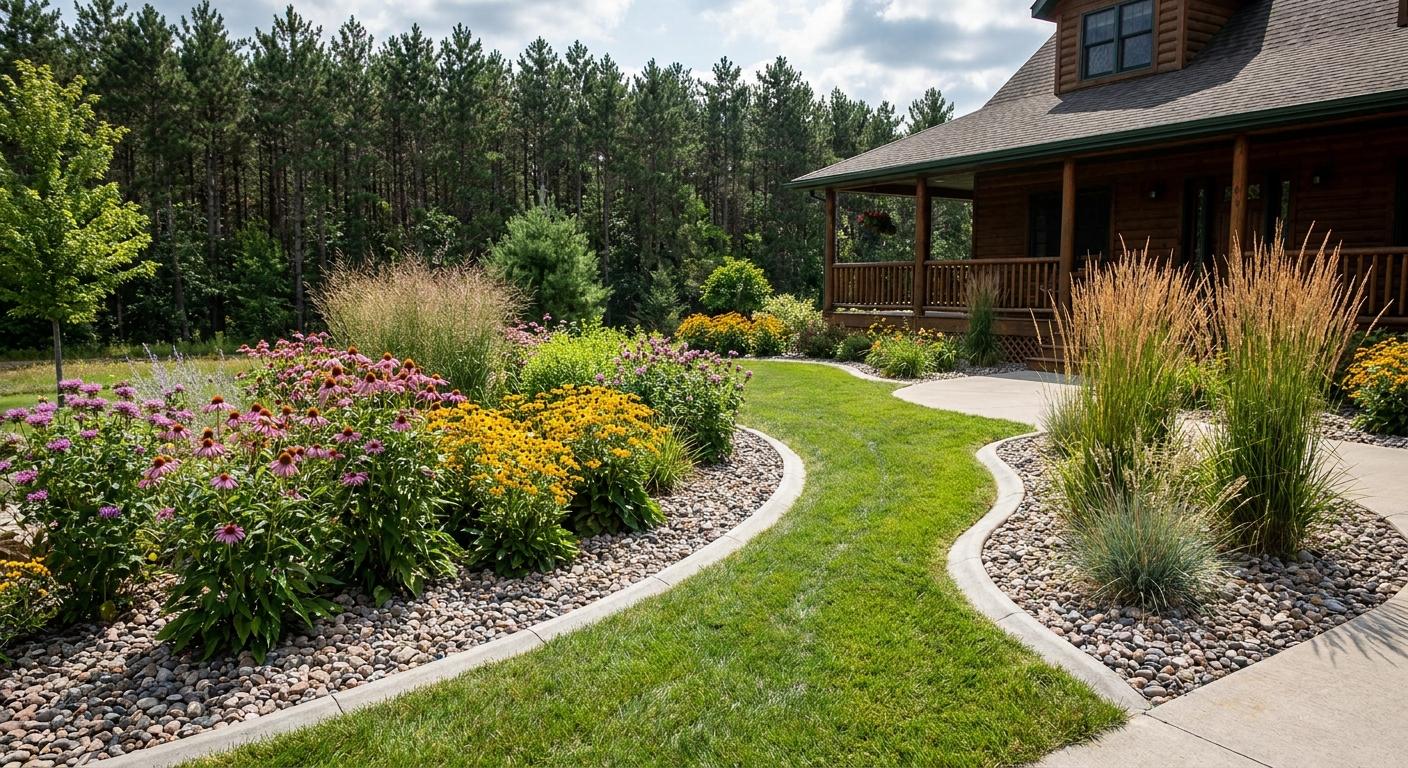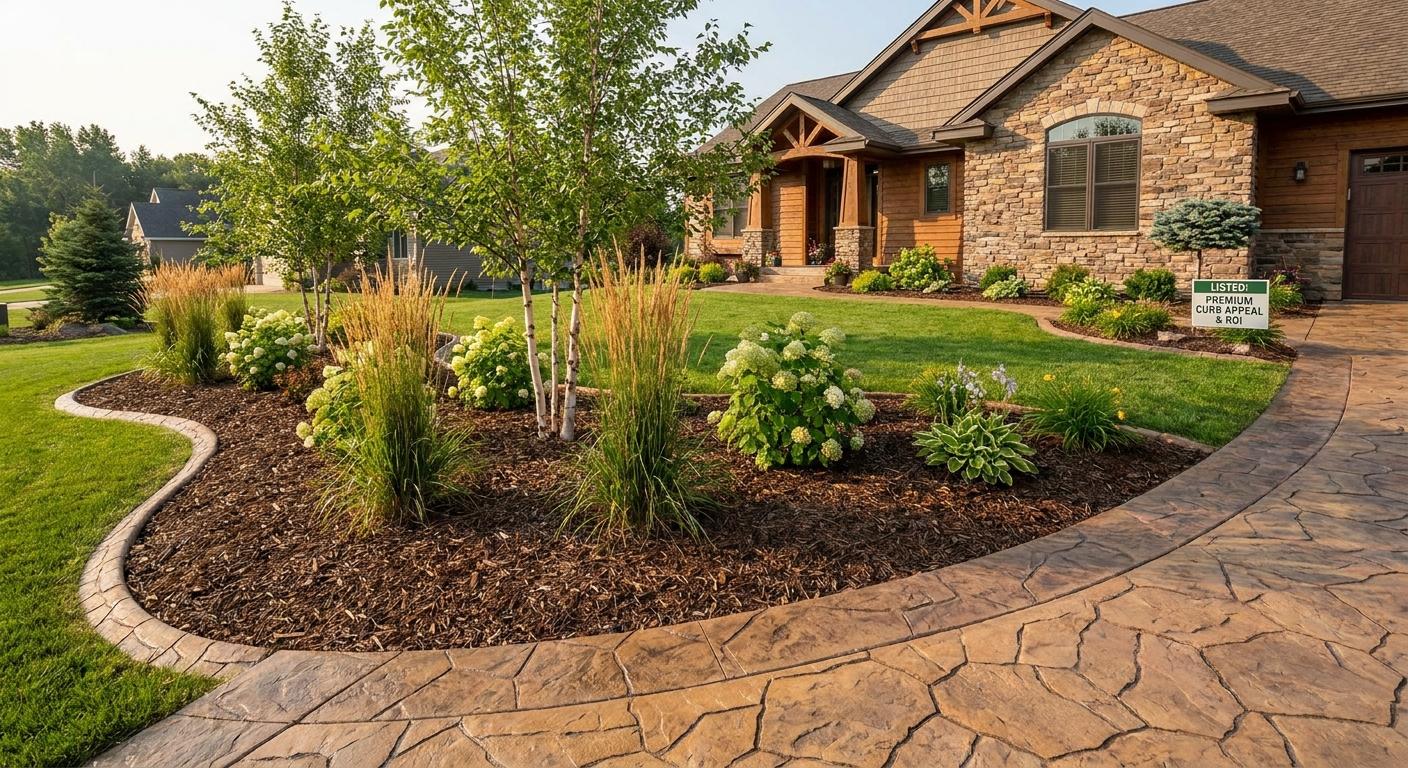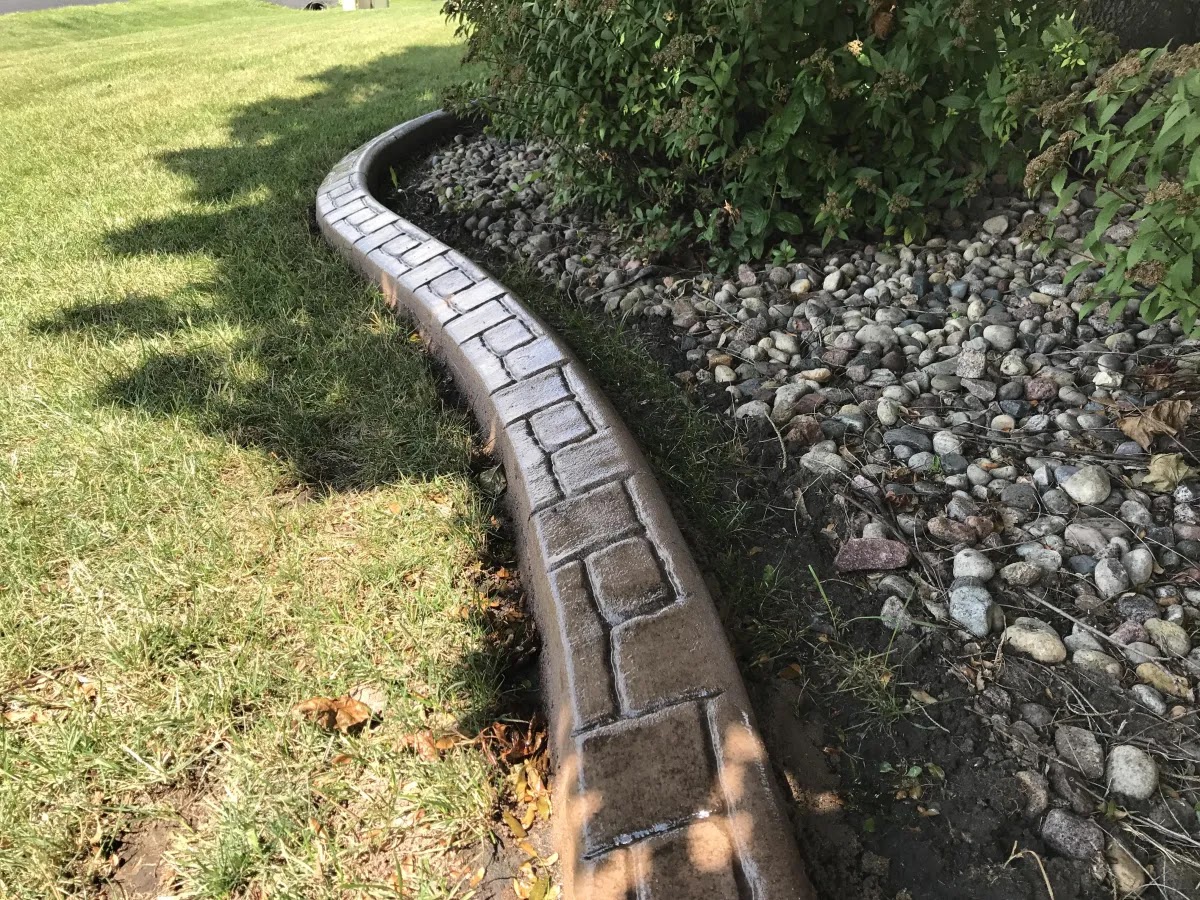
Concrete curbing for driveways creates a clean, permanent border between your driveway and the surrounding lawn or landscape beds. Styles range from smooth slant curbs to stamped cobblestone and flagstone patterns, with installed costs typically ranging from $10 to $20 per linear foot in Wisconsin.
After years of installing curbing around driveways in the Chippewa Valley and Northwoods, we’ve noticed that driveway borders take more abuse than any other curbing on a property. Snow plows clip them. Salt runoff eats at the surface. Soil along the driveway edge compacts differently from garden beds. Knowing that changes how we trench, mix, and seal every driveway project.
Armor Curbing Co. covers the most popular styles, benefits, and installation process below.
Popular Driveway Curbing Styles
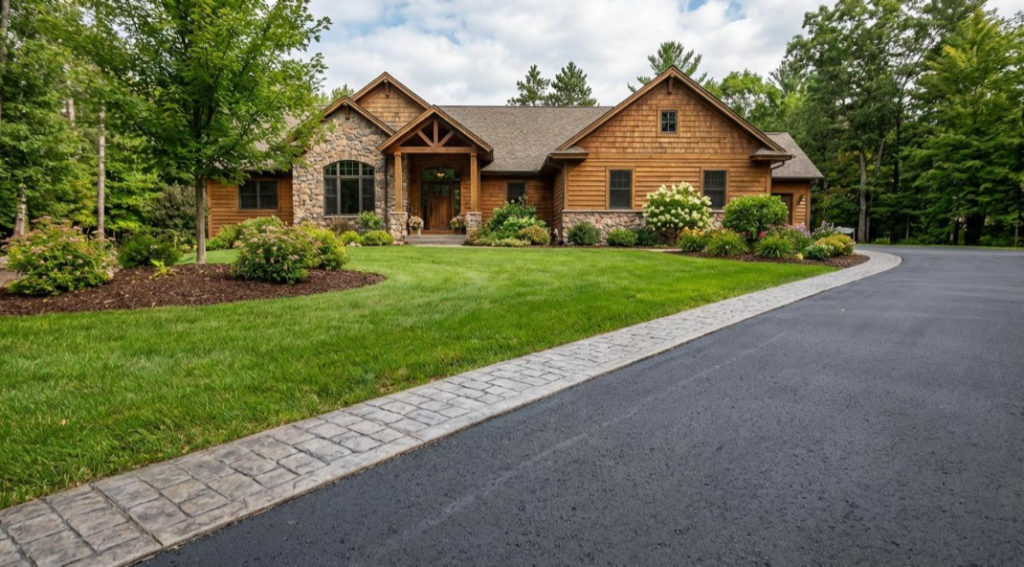
Choosing the right design for your driveway border depends on your home’s architecture and personal style preferences.
Decorative Stamp Patterns
Driveway curbing doesn’t have to be plain. Armor Curbing Co. offers a range of decorative stamp patterns that complement your home’s exterior and existing hardscape.
Cobblestone and flagstone stamps are the most popular for driveways because they mimic natural stone at a fraction of the cost. Soldier course, a clean brick-like pattern, works well for homeowners who want a traditional look that matches brick-front homes common in Eau Claire and Chippewa Falls. For a more rustic feel, castle rock and random rock patterns blend naturally with the wooded lots found throughout Hayward and Rice Lake. Explore the full range of curbing design options to find the right fit for your property.
Custom Color Integration
Color is mixed into the concrete during installation, so it won’t peel or flake like paint. Custom color blends let you match existing driveway concrete, walkways, or your home’s exterior palette.
Benefits of Concrete Curbing Along Driveways

Installing a concrete border along your driveway provides several functional and aesthetic advantages for homeowners in the Midwest.
Landscape Material Containment
The primary benefit is containment. Driveway curbing stops gravel, mulch, and soil from washing across the driveway’s surface during rain. In northern Wisconsin, spring snowmelt pushes landscape material onto driveways every year, and a concrete border eliminates that cycle.
Edge Protection and Maintenance
Curbing also protects your lawn edge from mower damage and weed creep. Without a hard border, grass gradually thins along the driveway where it meets gravel or bare soil. Concrete curbing creates a defined line that keeps turf healthy right up to the edge.
Enhanced Curb Appeal
For properties in the Eau Claire area, driveway curbing adds visible curb appeal, framing the property and giving it a finished, intentional look. For more on patterns that work with different home styles, see the full guide to concrete curbing styles.
What To Expect During Installation

Most driveway curbing projects take one day to complete. The installation process starts with a site evaluation where the team assesses soil conditions, drainage flow, and the driveway’s existing grade. The layout is marked with spray paint so you can approve the exact placement before work begins.
Trenching along driveways requires extra depth in northern Wisconsin because soil next to paved surfaces compacts and freezes differently than open ground. Armor Curbing Co. trenches to frost depth and installs reinforcement cable in the concrete mix to handle stress from plow contact and salt exposure. Control joints cut every two feet allow the curbing to expand and contract through freeze-thaw cycles without cracking.
After extrusion and hand-finishing, a UV-resistant sealer protects against sun damage and de-icing chemicals. Resealing every two years keeps the curbing looking sharp. For a full pricing breakdown, check our concrete curbing cost guide.
Frequently Asked Questions
Will snow plows damage driveway curbing?
Concrete curbing installed at the correct height and distance from the driveway edge withstands normal plow contact. Armor Curbing Co. positions driveway curbs to minimize plow strikes while maintaining a clean visual line. Reinforcement cable inside the concrete prevents the curb from breaking apart if a plow does clip the surface.
Can driveway curbing help with drainage?
Driveway curbing can direct water flow away from your foundation and toward designated drainage areas. The layout consultation accounts for roof runoff, driveway slope, and natural water movement so the curbing works with your property’s drainage pattern rather than blocking it.
How long does driveway curbing last in Wisconsin?
Properly installed and sealed driveway curbing can last decades in northern Wisconsin’s climate. Frost-depth trenching, reinforcement cable, and UV-resistant sealer protect against the three biggest threats to concrete in this region: freeze-thaw cycles, salt damage, and prolonged sun exposure.
Define Your Driveway the Right Way

Driveway curbing is one of the simplest upgrades that makes a lasting visual and functional difference. The right style frames your property, a concrete barrier keeps landscape materials where they belong, and professional installation means the border handles Wisconsin winters without significant shifting or cracking.
Reach out to Armor Curbing Co. to schedule a free driveway curbing estimate.