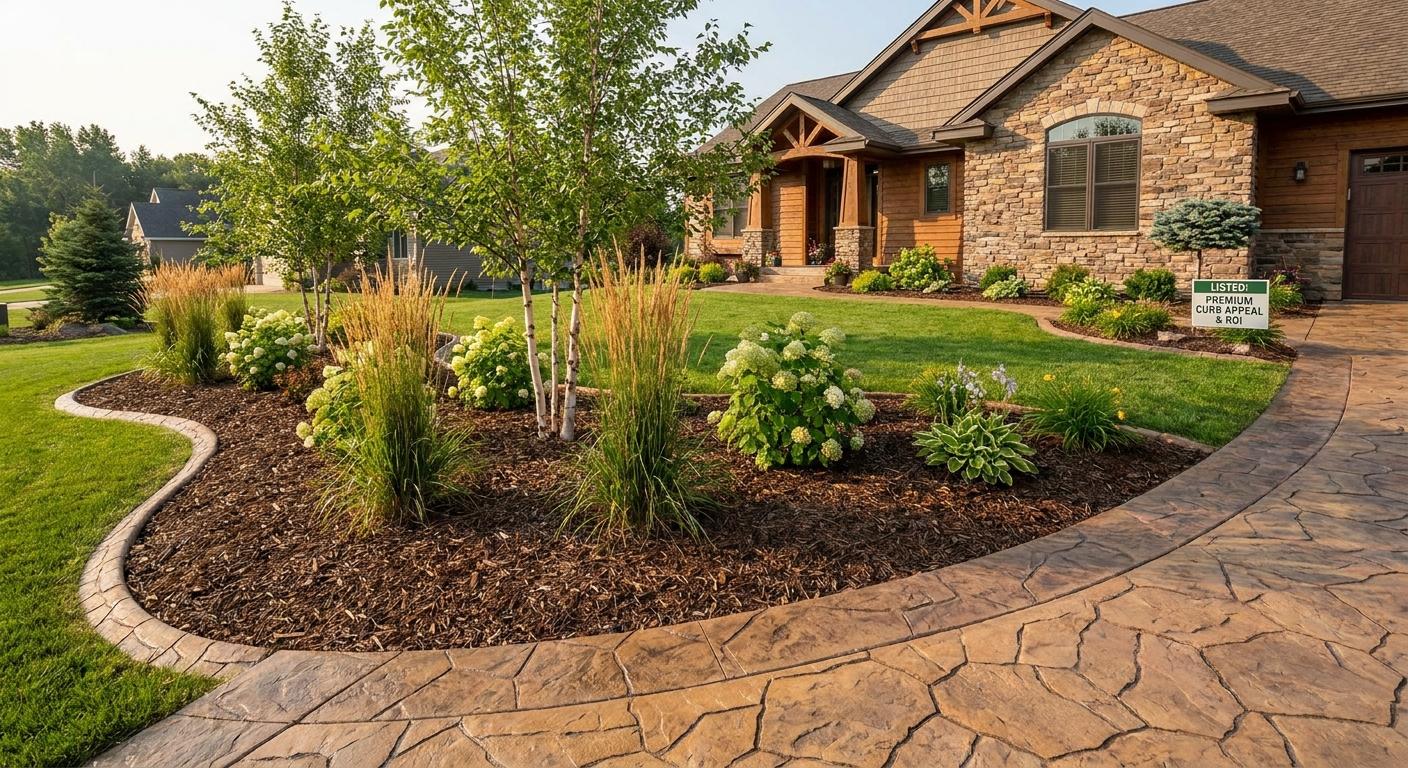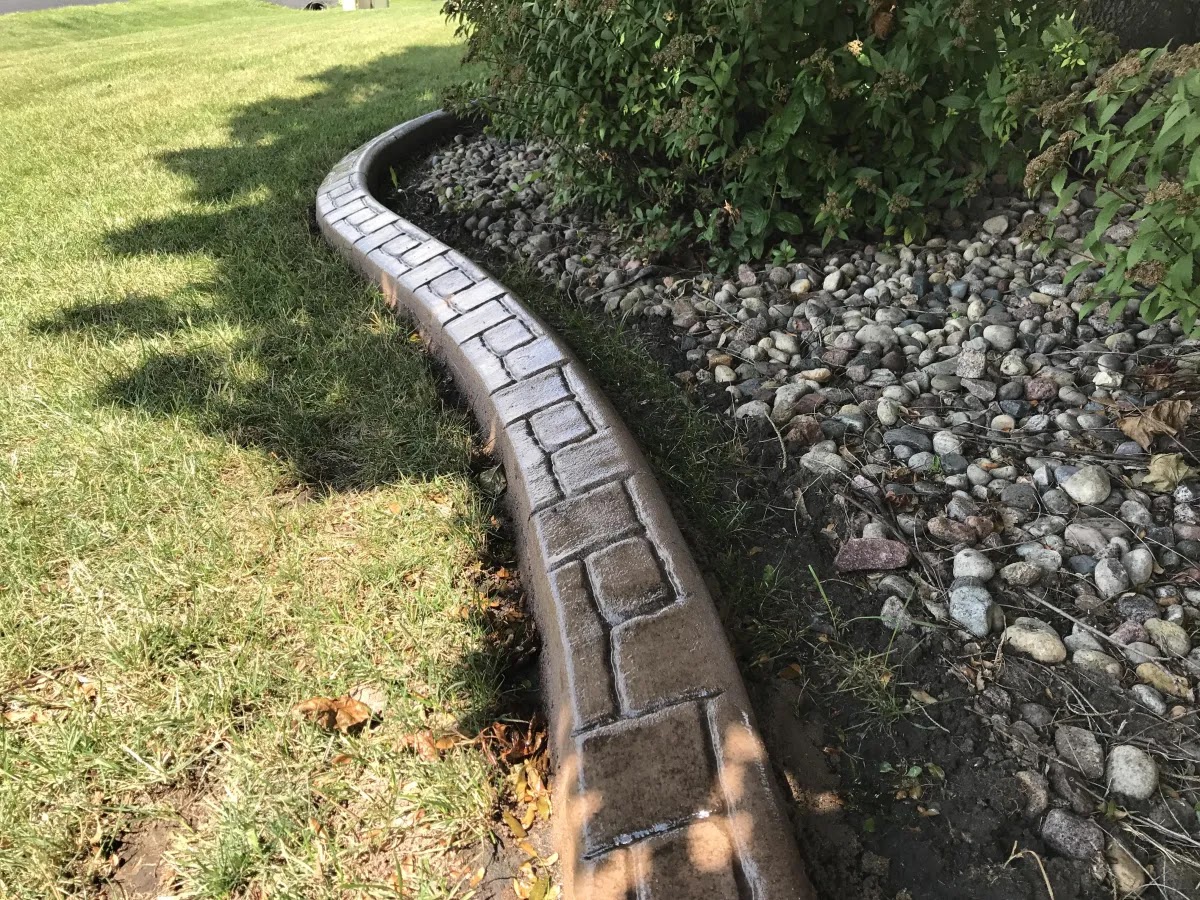
The best low-maintenance front yard ideas for Northern Wisconsin target the four chores that consume your weekends: edging repair, weeding, mulch containment, and plant replacement. Permanent concrete curbing replaces edging you’d otherwise reset every one to three years and lasts 15 to 25 years. Native zone 3–4 perennials regrow without replanting or winter protection. Stone mulch suppresses weeds without annual top-offs. And converting part of the lawn to contained beds reduces the time you spend mowing.
Most of these upgrades pay for themselves within two or three seasons, creating a low-maintenance yard that still looks intentional. Armor Curbing Co. installs decorative concrete curbing across Northern Wisconsin and Duluth that anchor beds and lessen edging maintenance to near zero. In this blog post, we tackle permanent borders, native and deer-resistant plants, low-work hardscape surfaces, and design approaches for wooded and lakefront lots.
Permanent Borders That Eliminate Edging Repair
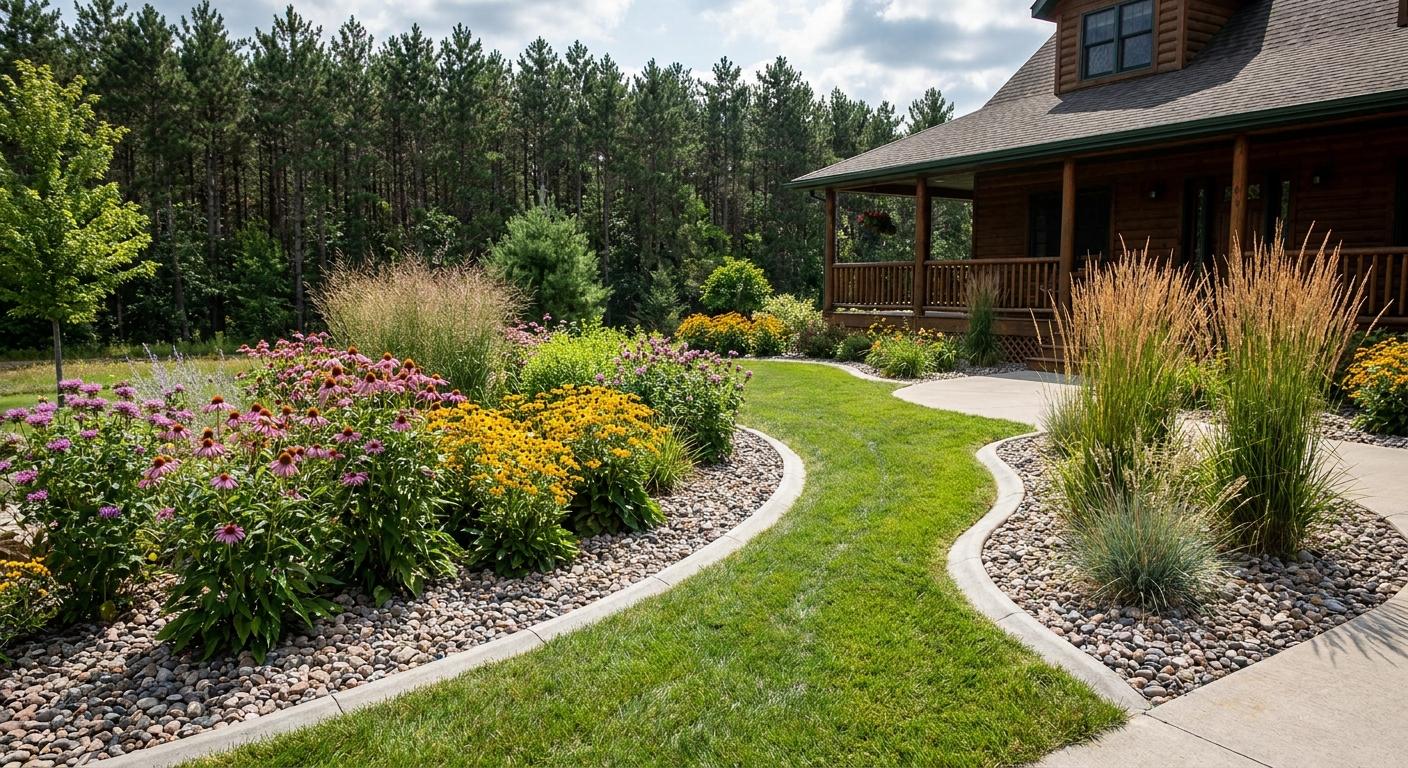
Having to repair your edging is one of the most time-consuming spring tasks for Northern Wisconsin homeowners. Plastic edging heaves out of frozen ground, metal edging corrodes at the soil line, and landscape timbers rot at ground contact. Replacing or resetting these borders every one to three years consumes entire weekends.
Concrete Curbing as a Permanent Edge
Extruded concrete curbing eliminates edging repair entirely. The continuous pour creates a seamless border that resists frost heave through reinforcement cable and absorbs ground movement through control joints cut every two feet. Once installed, the curbing typically holds its position for 15 to 25 years with no resetting, no stake replacement, and no material swaps. The cost of concrete curbing is higher upfront than disposable edging, but the maintenance savings start immediately.
Mow-Over Profile
Armor Curbing Co. offers a mow-strip profile that sits flush with the lawn surface, allowing the mower wheel to ride along the curb edge. This eliminates hand-trimming along every garden bed, saving 15 to 30 minutes per mowing session depending on the number of beds in the front yard.
Native Plants That Thrive on Their Own
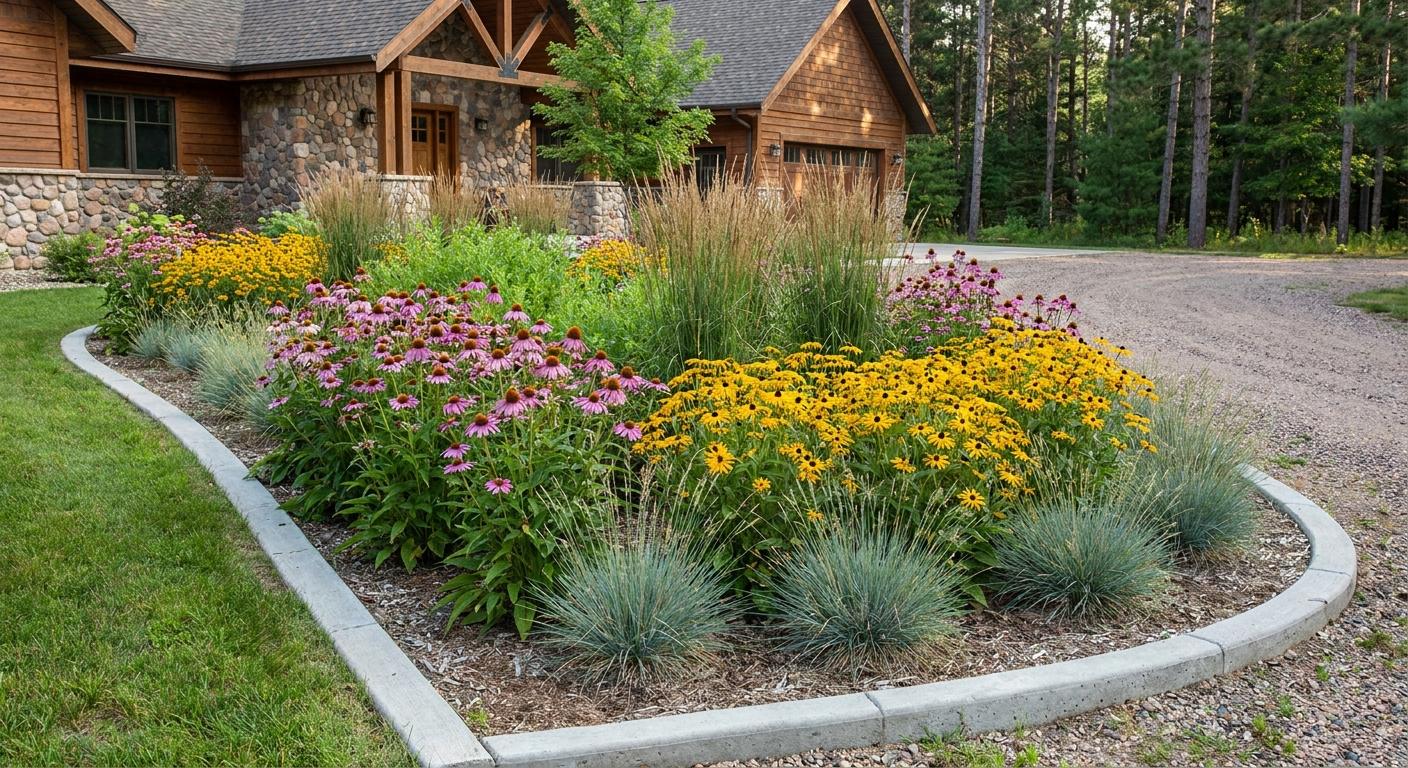
Plant replacement is the second biggest maintenance drain in Northern Wisconsin front yards. Ornamental varieties bred for warmer zones die back during harsh winters or require heavy mulching and protective wrapping to survive.
Perennials for Zone 3 and Zone 4
Northern Wisconsin falls in USDA hardiness zones 3b to 4b. Native perennials adapted to these zones return year after year without replanting. Black-eyed Susan, purple coneflower, wild bergamot, and Karl Foerster feather reed grass all tolerate clay soil, cold winters, and moderate drought. These species establish strong root systems within two seasons and require no supplemental watering once established.
Deer-Resistant Selections
Deer browsing destroys ornamental plantings in rural and semi-rural Northern Wisconsin properties. Catmint, Russian sage, lavender, ornamental allium, and ferns are among the most reliably deer-resistant perennials for the region. Pairing these with concrete curbing creates a contained, low-maintenance bed that holds its shape and its plants through every season.
Hardscape Surfaces That Reduce Yard Work
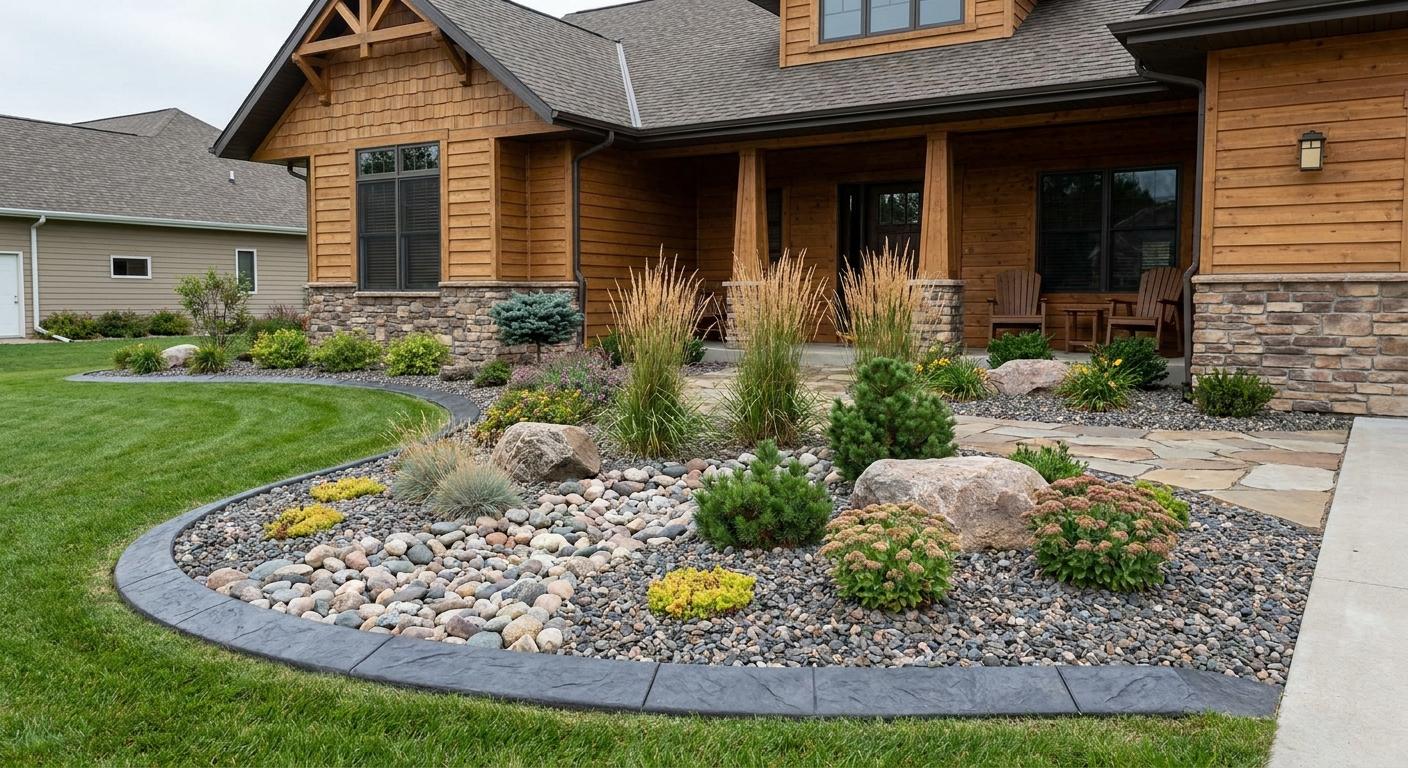
Reducing the area that requires mowing, weeding, or seasonal planting is the most direct path to a low-maintenance front yard.
Stone Mulch and Rock Gardens
Stone mulch doesn’t decompose, doesn’t need annual replacement, and suppresses weeds more effectively than organic mulch in Northern Wisconsin’s short growing season. River rock, pea gravel, and decorative stone paired with concrete curbing borders create beds that require almost no seasonal maintenance. The curbing prevents stone migration into the lawn, which eliminates the raking and containment work that loose stone otherwise demands.
Reduced Lawn Area
Converting portions of the front lawn to mulched beds, ground cover, or hardscape reduces mowing time proportionally. A front yard that replaces 40% of its lawn area with contained landscape beds cuts weekly mowing time by roughly 40%. The key is permanent borders that keep each zone defined, and concrete curbing’s profile options and maintenance schedule make it the strongest fit for mixed-surface front yards where every boundary needs to hold through five months of snow.
Design Ideas for the Ashland and Chequamegon Bay Area
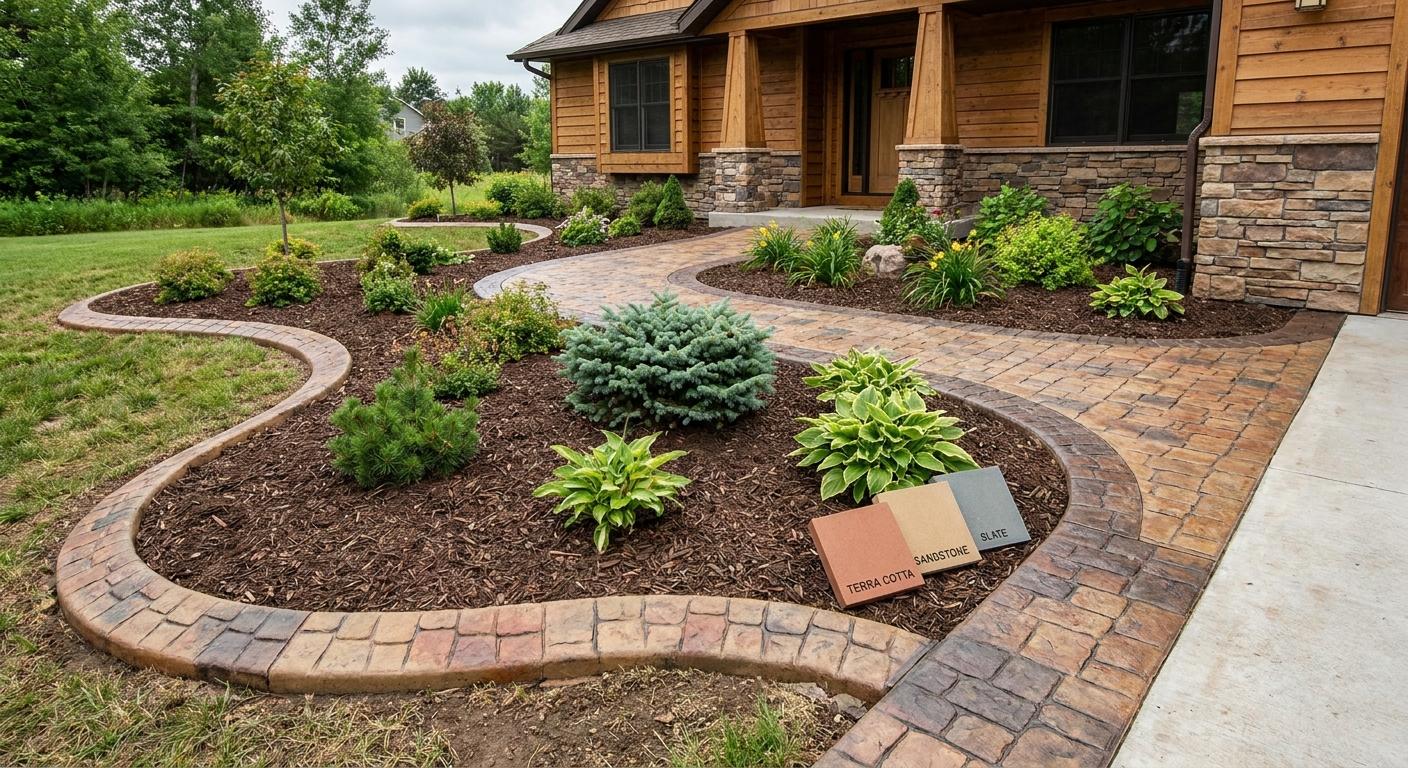
Homeowners in the Ashland and Chequamegon Bay area often work with wooded lots, lakefront exposure, and clay-heavy soil that presents unique design opportunities.
Wooded Lot Approach
Properties surrounded by mature pine and birch benefit from a natural aesthetic. Concrete curbing styles like castle rock or random rock complement the wooded setting. Native ferns, hostas for shaded areas, and low-growing juniper ground cover fill beds without competing with tree root systems. The curbing’s shallow installation depth avoids disturbing established root zones.
Lakefront Properties
Lakefront yards near Chequamegon Bay deal with sandy-clay soil transitions, wind exposure, and the visual expectation of a maintained waterfront appearance. Ornamental grasses like prairie dropseed and little bluestem tolerate wind and sandy conditions while providing year-round texture. Concrete curbing in a soldier course or cobblestone pattern creates clean geometric lines that contrast with the natural shoreline.
Frequently Asked Questions
What is the lowest-maintenance front yard edging?
Extruded concrete curbing is the lowest-maintenance front yard edging for Northern Wisconsin. After installation, the only maintenance is resealing every two to three years and clearing debris from the curb edge. It doesn’t require resetting, stake replacement, or material swaps that plastic and metal edging demand after every winter.
Do native plants really reduce yard maintenance?
Native plants adapted to USDA zones 3b through 4b reduce maintenance significantly because they do not require supplemental watering once established, do not need winter protection, and return year after year without replanting. The initial establishment period takes one to two seasons, after which maintenance drops to seasonal cutback and occasional division every three to five years.
How much does it cost to convert a front yard to low maintenance?
Conversion costs depend on the yard’s size and the scope of changes. Concrete curbing for a typical front yard runs $1,500 to $4,000 at $10 to $20 per linear foot in Wisconsin. Native plant installation adds $3 to $15 per plant depending on species and size. Stone mulch costs $100 to $300 per cubic yard delivered. Most homeowners schedule the conversion over two to three seasons to spread the investment.
Start With the Border That Never Needs Replacing

Every low-maintenance front yard starts with borders that stay in place. Concrete curbing handles that job for 15 to 25 years without repair, resetting, or replacement. Once the borders are permanent, every other upgrade you add stays contained and defined through every Northern Wisconsin season.
Contact Armor Curbing Co. at (715) 934-9037 to schedule a free estimate for concrete curbing that anchors your low-maintenance front yard design.