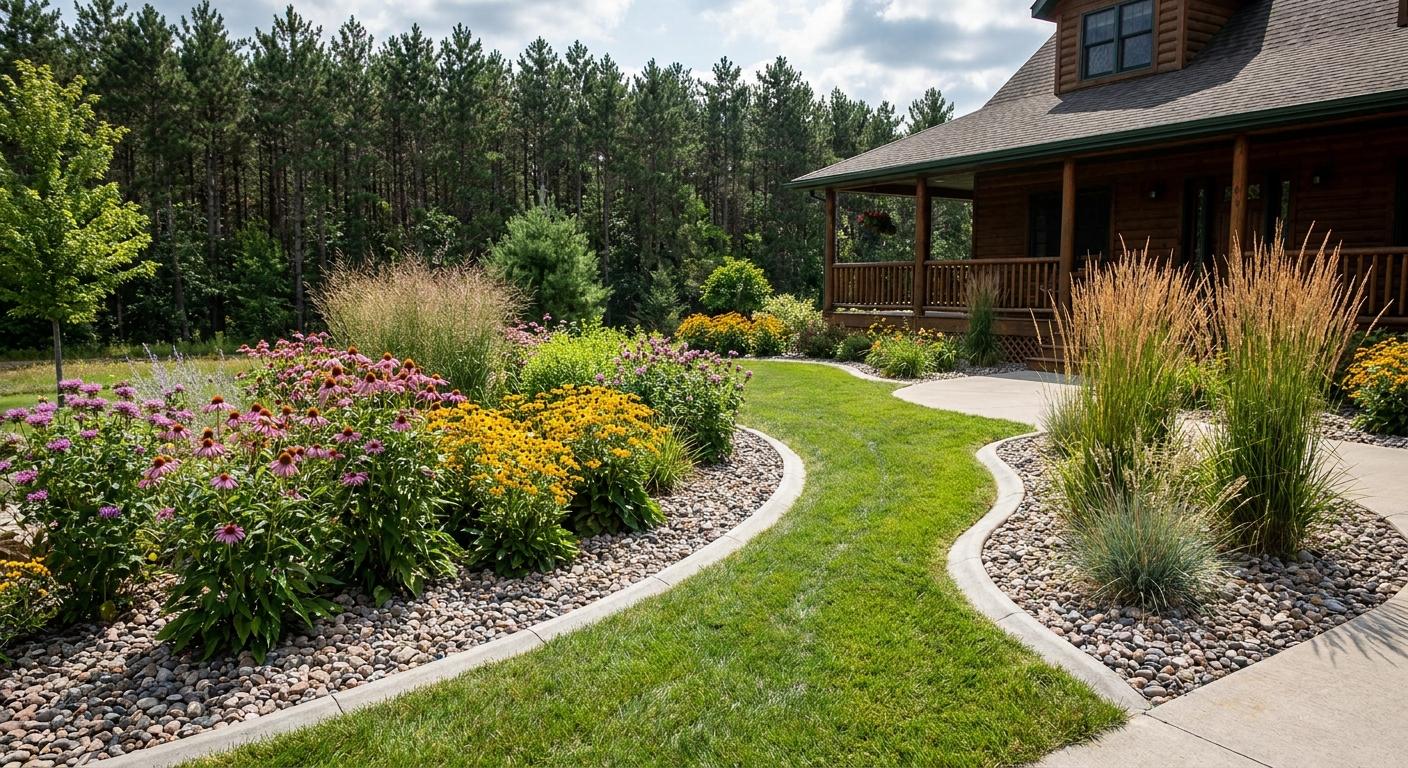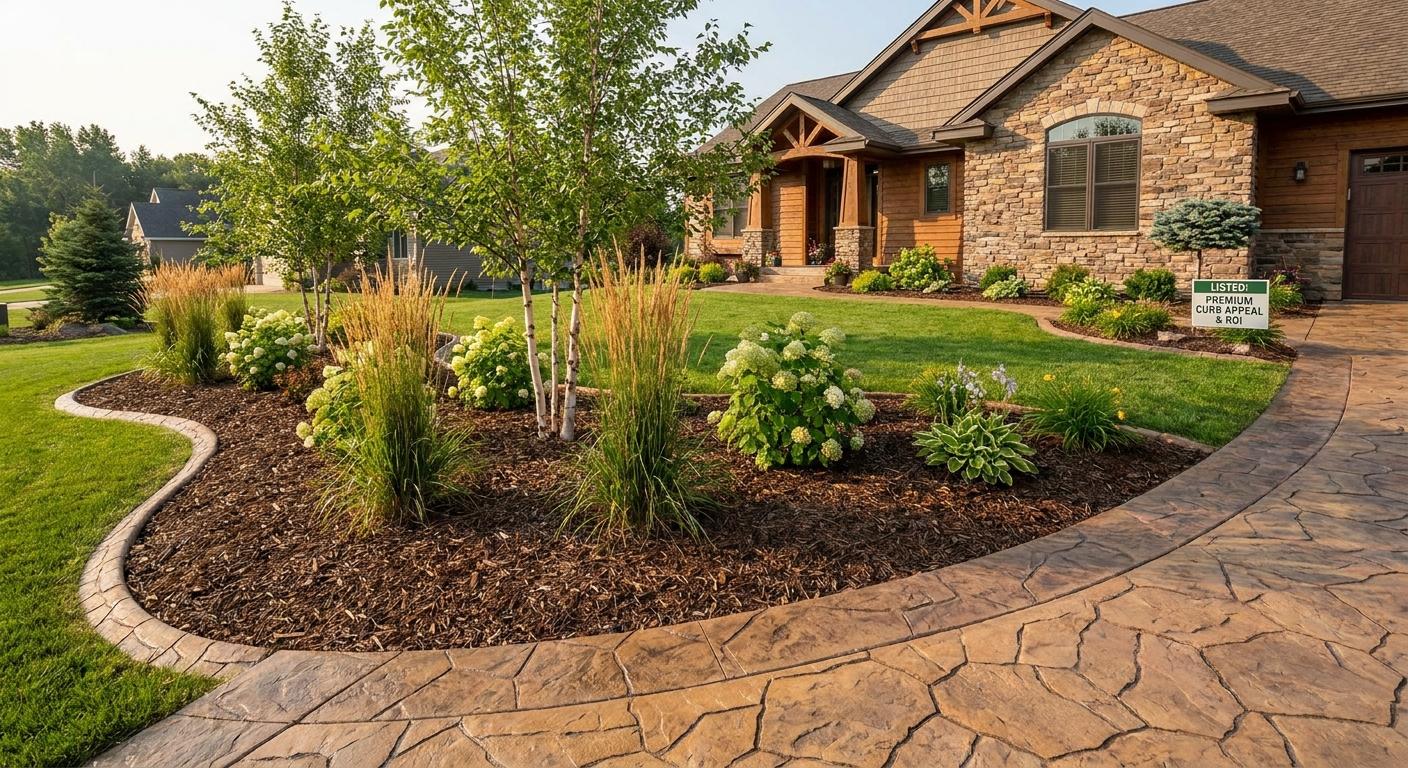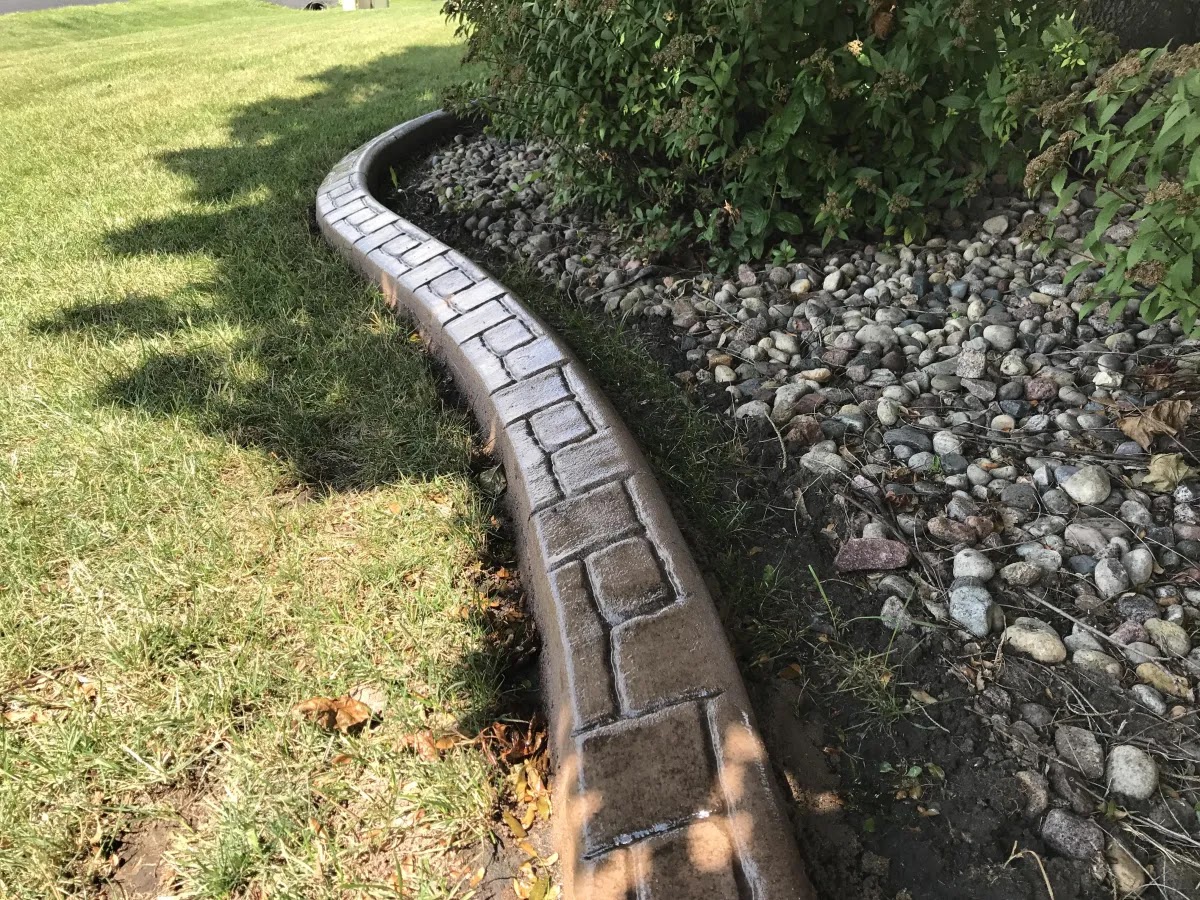
Stamp concrete curbing styles include options from cobblestone and flagstone to hand-hewn and rough stone textures. The pattern is pressed into the concrete during installation and is designed to hold its detail long-term with proper sealing. Armor Curbing Co. installs stamped landscape curbing across northern Wisconsin and Duluth, MN. This guide covers each style and how to choose the right one.
Last spring, a Hayward lakefront property had plastic edging heaving out of the soil every April. By early summer, the same beds were framed with cobblestone-stamped concrete curbing following every curve of the shoreline. Same plants, same layout—completely different property. That’s what the right stamp pattern does, and it starts with knowing your options.
The 8 Basic Stamp Styles

Choosing a stamp matters more than most people expect. Bold patterns like Cobblestone or Castle Rock show up well from the street. Subtle textures like Wood Grain are beautiful up close but can disappear from 30 feet away. In Duluth’s East Hillside, where your yard is often seen from the road below before anyone walks up to it, a high-contrast stamp earns its keep in a way a fine-grain pattern simply doesn’t.
With that in mind, here are the eight patterns Armor Curbing installs most:
- Cobblestone: Rounded irregular stone shapes that pair naturally with cottage gardens, lakefront properties, and established landscaping. Traditional feel with strong street presence.
- Castle Rock: Chiseled, angular stone face with deep relief. Shadow lines help this pattern stand out in low light. Best for craftsman or stone-facade homes.
- Flagstone: Irregular flat-stone shapes with natural joints. Flagstone handles curved beds better than most patterns because the irregular shapes don’t require symmetry. Works in both rustic and contemporary landscapes.
- Spanish Tile: Scalloped half-round shapes arranged in a repeating row. A natural match for stucco or Mediterranean-influenced homes, and a clean contrast against dark mulch or stone beds.
- H-Brick: Running bond brick scaled for curbing. Clean and predictable. The natural match if your home already has brick elements.
- Soldier Course: Uniform upright rectangular units. More formal than Cobblestone, less textured than Castle Rock. Works well for commercial properties and symmetrical residential yards.
- Random Rock: Fully irregular stone shapes with no repeating units. Looks more natural rather than designed. Fits well in native plant or woodland gardens.
- Wood Grain: Parallel grain lines mimicking weathered timber. Best as an accent around raised beds or a patio edge, not a full perimeter border.
Keep the viewing distance in mind as you choose from these eight popular patterns. Match it to your landscaping character, not just personal preference.
The 2 Advanced Stamp Styles
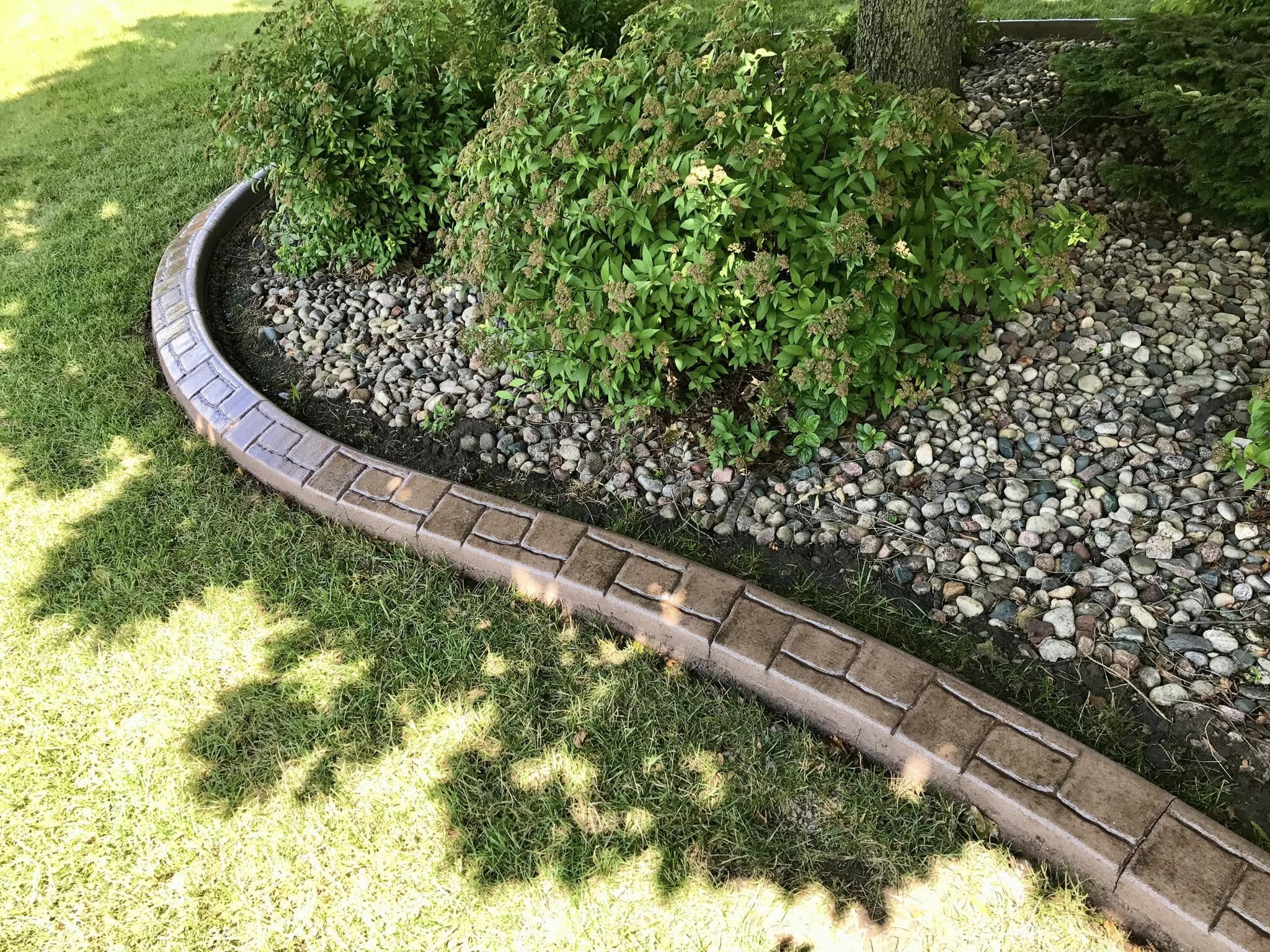
These patterns use more detailed tooling and suit properties where the curbing is meant to stand out as a design feature.
- Natural Stone: Tight-jointed, refined stone face. Best for properties where the curbing runs adjacent to existing stonework and needs to match that material character.
- Hand-Hewn: Rough-faced surface replicating hand-cut stone. A strong fit for Duluth-area properties where rugged natural materials match the regional architecture and Northwoods landscape.
Building Stamps That Survive Northern Winters
Pattern selection is aesthetically driven. Proper concrete curbing installation is what keeps it intact—and in northern Wisconsin and Minnesota, you can’t have one without the other.
Armor Curbing Co. cuts control joints approximately every two feet, a spacing calibrated for the freeze-thaw cycles this region sees each winter. Those joints let the concrete expand and contract without fracturing across the stamped face. A surface without proper jointing in cold climates is more likely to develop stress cracks along the stamp lines over time.
Color selection also affects how a stamp looks. Deep-relief patterns like Castle Rock and Hand-Hewn perform better in darker tones. Flatter patterns hold visual weight even in lighter earth tones. Curbing color options are worth reviewing alongside pattern selection so both choices reinforce each other.
Frequently Asked Questions
Can stamped concrete curbing hold its pattern through harsh northern winters?
Yes. Stamped concrete curbing retains its pattern through Wisconsin and Minnesota winters when control joints are cut every two feet and a UV-resistant sealer is applied. The joints allow the slab to expand and contract through freeze-thaw cycles without fracturing across the stamped surface.
Which stamp pattern works best on curved garden beds?
Irregular patterns like Flagstone and Random Rock handle curves best because they don’t require symmetrical alignment to look intentional. Regular patterns like H-Brick and Soldier Course can follow curves but require more care during stamping to avoid visible distortion at transition points.
How often does stamped concrete curbing need resealing in this climate?
Armor Curbing Co. recommends resealing every two years for northern Wisconsin and Minnesota properties. The sealer protects color vibrancy while resisting water infiltration and de-icing salt damage. Skipping resealing makes the color fade faster and leaves the surface more vulnerable to freeze-thaw moisture damage over time.
Choose the Right Stamp for Your Property
Style is personal, but the installation has to hold up in your climate. Armor Curbing Co. focuses exclusively on concrete landscape curbing, so every stamped project in northern Wisconsin and Duluth is built to handle its winters, not just look good on day one. Request a free estimate and we’ll walk through your pattern and color options together.