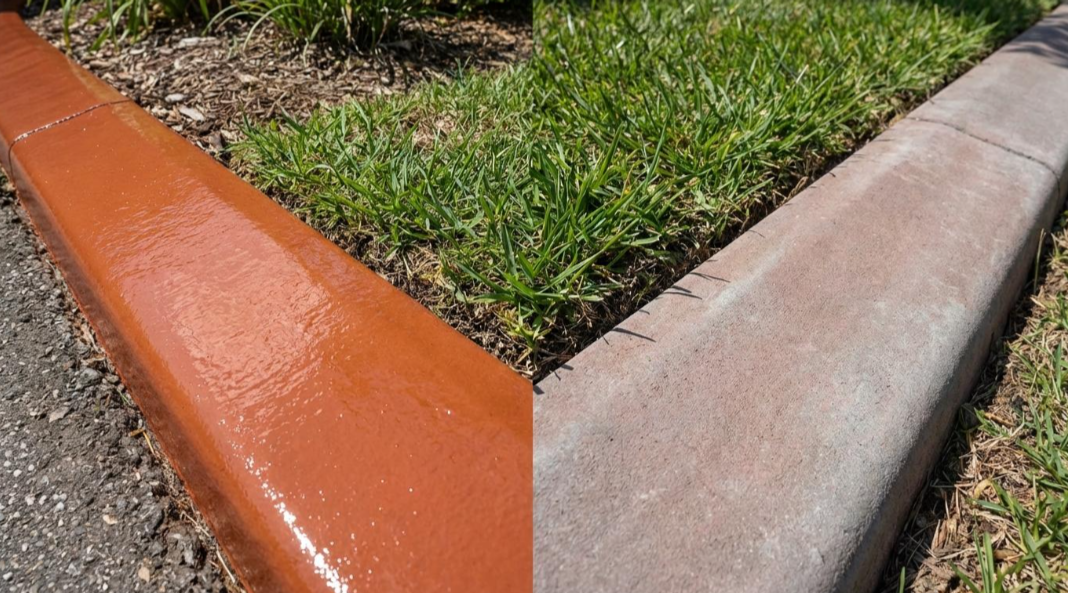
Landscape border ideas for northern Wisconsin need to survive repeated freeze-thaw cycles, heavy snow loads, and an extended salt-exposure season. Concrete curbing, natural stone, and steel edging are the three most durable options, with extruded concrete typically delivering the best long-term performance in this climate. Armor Curbing Co. installs concrete landscape borders across northern Wisconsin and Duluth, MN.
If you’ve been weighing these three options for your property, you’ve probably found legitimate arguments for all of them. Each has a real case in milder climates. What changes the math here is the ground itself. High-clay Northwoods soil shifts with every thaw, deep winter cold, and road salt trucks that run past your driveway from November through April.
Concrete Landscape Curbing: Built for Freeze-Thaw Cycles

Extruded concrete curbing is poured as one continuous, seamless piece along your garden beds, walkways, and lawn edges. There are no joints, stakes, or individual pieces for frost to push apart. Reinforcement cable in the mix adds tensile strength, and control joints cut every two feet let the concrete expand and contract with temperature swings instead of cracking randomly.
Professionally installed concrete curbing in Wisconsin runs $10 to $20 per linear foot, with the exact price depending on your chosen stamp pattern and site conditions. Its upfront cost is higher than steel’s, but typically less expensive than that of quality natural stone. Concrete curbing is built to last with minimal upkeep: resealing every two years is the recommended maintenance. From frost-depth trenching to UV-resistant sealing, the Armor Curbing’s process covers every step of the installation.
Natural Stone Borders: Beautiful but High-Maintenance

Fieldstone, flagstone, and cut limestone give landscapes the most organic, permanent-looking border of any material. The aesthetic fits lakeside cabins in Hayward and wooded properties across the Northwoods particularly well. Expect $15 to $30 per linear foot installed, depending on stone type.
The catch is seasonal movement. Individual stones rely on gravity and friction to stay in place, and neither holds up when frost heaves the subsoil beneath them. Homeowners here often spend part of spring resetting stones that shifted, lifted, or rotated over the winter. Weeds also grow in the gaps quickly because there’s no continuous surface to block them. For the stone look without the annual reset, stamped concrete in natural stone or flagstone patterns is a closer match than most homeowners expect.
Steel Edging: Thin Lines, Short Lifespan
Steel landscape edging creates crisp lines between lawn and beds. It can be installed quickly by driving stakes into the ground. Basic galvanized or painted steel runs $2 to $5 per linear foot; corten and powder-coated options push toward $5 to $10. It’s the cheapest of the three up front.
In northern Wisconsin, steel’s weaknesses reveal themselves within the first few winters. Stakes loosen as frost heaves the soil. Rust develops at the soil line where moisture collects, and salt runoff accelerates the corrosion. The top edge bends or curls when it catches a plow blade. Steel edging in this climate often needs replacement or straightening within a few years, which erodes the upfront savings sooner than most homeowners expect.
Choosing the Right Border for Your Property
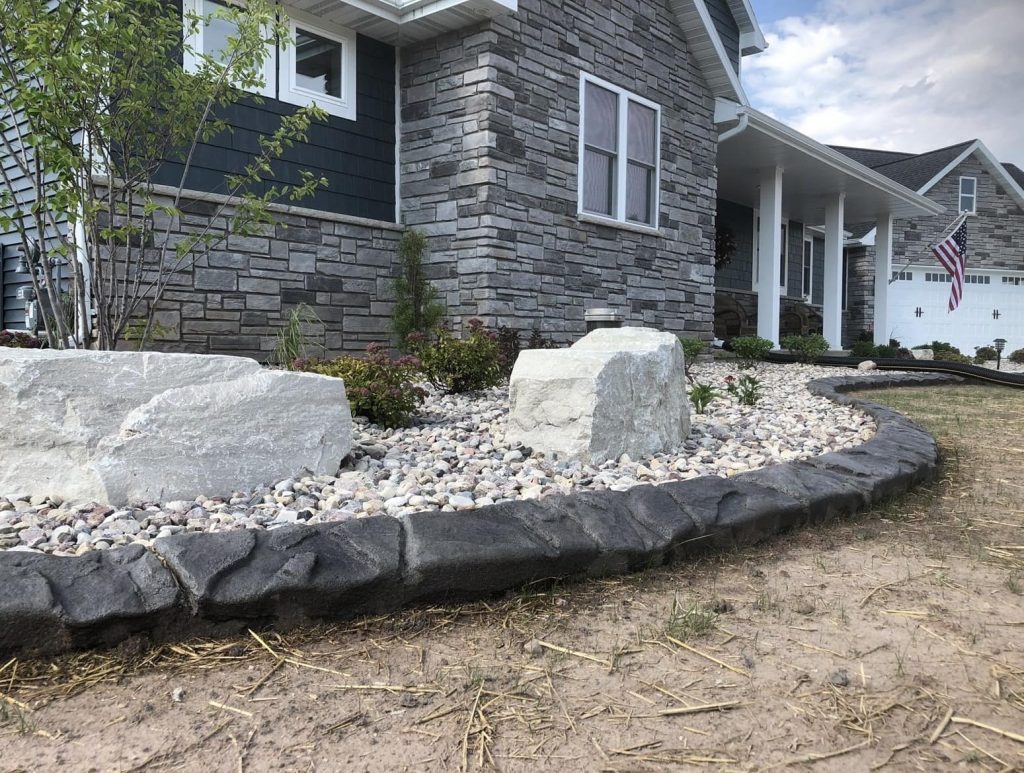
Concrete curbing makes the strongest long-term case for most homes in northern Wisconsin and the Duluth area because it offers the best durability for the dollar in this climate. Natural stone fits properties where an organic, handmade look outweighs the seasonal reset work. Steel works for short-term projects or rental properties where the border only needs to last a few years. For homeowners planning to stay, the cost of conncrete curbing in Wisconsin typically pencils out to a lower total cost of ownership over the long run.
Frequently Asked Questions
What landscape border lasts the longest in cold climates?
Extruded concrete curbing lasts the longest in cold climates because it’s poured seamlessly with frost-depth trenching, control joints every two feet, and reinforcement cable. Armor Curbing Co. installs concrete borders across northern Wisconsin and Duluth designed to withstand freeze-thaw cycles, salt exposure, and snow removal contact without requiring replacement.
How do I choose between stamped concrete and real stone?
Real stone delivers an organic look but needs resetting each spring as frost shifts the soil beneath it. Stamped concrete mimics stone patterns in one seamless pour that won’t move. For most northern Wisconsin properties, stamped concrete delivers the stone look with much less ongoing maintenance than the real thing.
Does steel edging rust faster near Lake Superior?
Yes. Lake-effect moisture combined with winter salt spray speeds corrosion on bare or galvanized steel throughout the Twin Ports, Ashland, and Two Harbors corridor. Powder-coated and corten steel resist rust longer but still degrade faster than concrete in the same conditions.
Build a Border That Lasts

A landscape border only earns its keep if it survives the climate it’s installed in. In northern Wisconsin and the Duluth region, that means holding up to deep freeze-thaw cycles, heavy salt exposure, and regular snow removal without losing its shape. Concrete curbing handles all three demands better than stone or steel at a comparable long-term cost.
Get a free landscape border estimate from Armor Curbing Co. and find out which option fits your property and your climate.