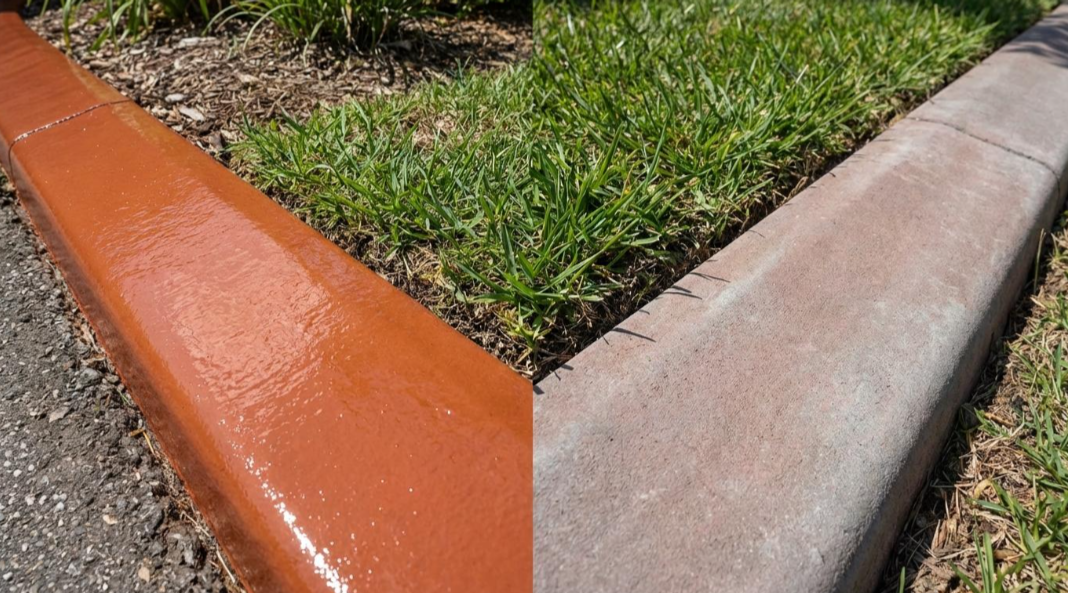
Mulch edging ideas that actually work in Wisconsin need to contain mulch through spring snowmelt, summer storms, and fall leaf cleanup without moving out of position. The most effective options include concrete landscape curbing, steel edging, and natural stone borders, with concrete curbing typically providing the most effective mulch containment in freeze-thaw climates. Armor Curbing Co. installs mulch-retaining borders across northern Wisconsin and Duluth, MN, built to keep beds defined year-round.
The problem most homeowners bring to us isn’t really about mulch. It’s about the edge. Mulch doesn’t migrate on its own. It gets pushed by water runoff, displaced by mowing, and scattered by freeze-thaw soil movement that lifts whatever border was supposed to contain it. Fixing the mulch problem means fixing the border first.
Why Mulch Won’t Stay Put Without the Right Edge

Mulch migrates for three reasons in Wisconsin, and all three trace back to what’s holding the bed edge.
Water Runoff
Water runoff is the biggest driver. Spring snowmelt and heavy summer rains push lightweight mulch over low-profile edging and onto the lawn. If your border sits below grade or has gaps between sections, water carries mulch through those openings every time it rains.
Mulch Displacement from Mowing
String trimmers and mower wheels that ride along the bed edge kick mulch onto the grass with every pass. A border that sits flush with the lawn surface lets the mower roll over it cleanly and keeps mulch inside the bed.
Freeze-Thaw Soil Movement
Northern Wisconsin soil heaves every winter, lifting plastic edging out of the ground and creating gaps where mulch escapes. By spring, the edging has shifted enough that it no longer functions as a barrier. That’s why homeowners in Eau Claire, Chippewa Falls, and across the Northwoods find themselves re-edging and re-mulching every year.
Mulch Edging Options That Work in Wisconsin

Each edging material handles mulch containment differently in a northern climate.
Plastic Edging
Plastic garden borders cost $1 to $3 per linear foot and is the easiest to install. In milder climates it performs adequately, but Wisconsin’s freeze-thaw cycles push it out of the ground within 2 to 3 seasons. Once it heaves, mulch flows over and under it freely.
Steel and Aluminum
Steel and aluminum edging holds its shape better at $3 to $8 per foot, but it rusts at the soil line where salt runoff and moisture collect. Rust weakens the material and eventually creates the same gaps.
Natural Stone
Natural stone borders look attractive but require periodic resetting. Individual stones shift with soil movement, creating gaps that let mulch escape. Maintaining a tight stone edge in a freeze-thaw climate means lifting and resetting stones every 1 to 2 years.
Concrete Borders
Concrete landscape curbing costs $10 to $20 per linear foot, but is poured as one seamless piece with no joints that separate. It stays in place through freeze-thaw cycles because it’s trenched to frost depth with reinforcement cable. For a closer look at decorative profiles for garden beds, see our guide to concrete curbing styles.
How Concrete Curbing Solves Mulch Migration
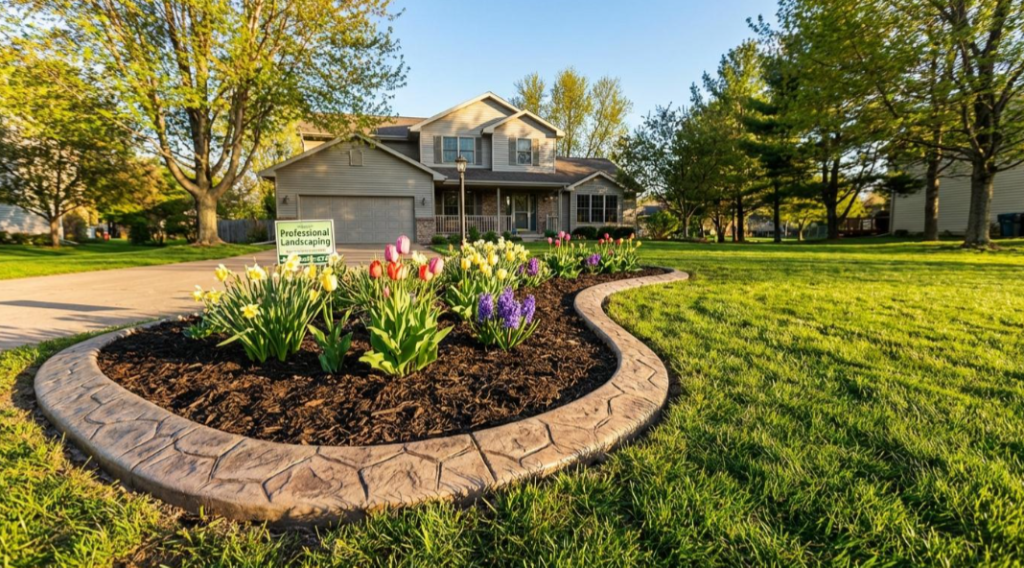
Concrete curbing addresses all three causes of mulch migration in one installation.
Seamless Pour Prevents Water and Mowing Displacement
The continuous pour eliminates joints and gaps where water pushes mulch through. The curb height sits above the mulch level on the bed side while remaining flush with the lawn on the mowing side. That profile lets your mower pass cleanly without kicking mulch out of the bed.
Frost-Depth Trenching Stops Soil Heave
Frost-depth trenching anchors the curbing below the freeze line, preventing it from heaving with seasonal soil movement. Control joints every two feet manage thermal expansion without creating openings. Armor Curbing Co. installs curbing for homeowners across the Eau Claire area who are tired of re-edging every spring. Look through our design options to see how stamped patterns enhance curb appeal while containing mulch.
Sealed Surface Resists Staining and Simplifies Maintenance
Sealed curbing also resists staining from decomposing mulch and grass clippings, as well as contact with the soil. A sealed surface can be wiped clean without scrubbing and holds its color longer between reseals. Armor Curbing Co. recommends resealing every two to three years to maintain protection and keep the finish looking its best.
Frequently Asked Questions
What is the best edging to keep mulch in place?
Extruded concrete curbing is the most effective edging for mulch containment because it’s poured as one seamless piece with no joints or gaps. Armor Curbing Co. installs curbing that sits above the mulch level on the bed side, creating a physical wall that prevents mulch from washing or blowing onto the lawn.
How tall should mulch edging be?
Mulch edging should sit 2 to 3 inches above the mulch surface to contain a standard 2 to 3 inch mulch layer. Concrete curbing profiles are designed to provide that height on the bed side while sitting flush with the lawn on the mowing side, so you get full containment without a tripping hazard.
Will concrete curbing crack from moisture in the mulch?
Properly sealed concrete curbing resists moisture from mulch. The UV-resistant sealer applied after installation blocks water penetration, and control joints every two feet manage any thermal stress. Resealing every two years maintains that moisture barrier through Wisconsin’s wet spring and fall seasons.
Keep Your Garden Beds in Line

Mulch migration is a border problem, not a mulch problem. The right edging keeps beds clean, eliminates annual re-edging, and gives your landscape a finished look that holds up through every season. In northern Wisconsin, concrete curbing is the most reliable material for handling freeze-thaw, mowing contact, and water runoff without losing its position.
Request a free mulch edging estimate from Armor Curbing Co. and stop re-edging every spring.